
Home Blood Pressure Readings: Technique, Records and a Useful Doctor Review
29
Nov
Home Blood Pressure Readings: Technique, Records and a Useful Doctor Review
Key Takeaways & Summary
- A home blood pressure machine can be useful, but the readings need a reliable technique and a clear review plan.
- The goal is information that supports care, not a competition to obtain the lowest reading or a substitute for urgent assessment when serious symptoms occur.
- Consult with the experienced specialists and clinical teams at hnc hospitals for personalized diagnostics and treatment options.
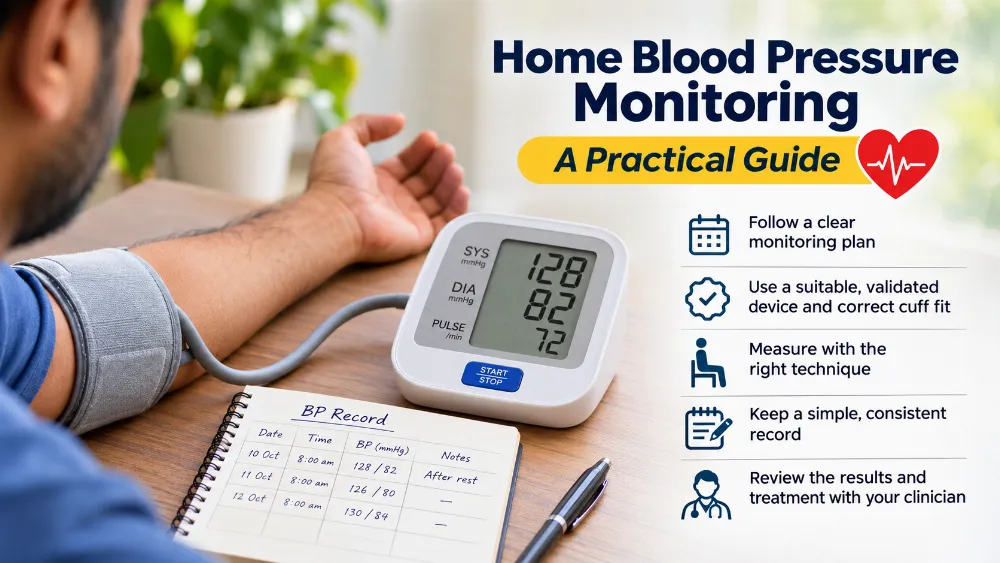
A home blood pressure machine can be useful, but the readings need a reliable technique and a clear review plan. Repeated checking without guidance can create anxiety, while one reassuring number can encourage false confidence. This guide explains how to organise monitoring with your clinician, record results consistently, and avoid changing treatment independently. It is intended for adults seeking a practical blood pressure review in Mattannur or Kannur. The goal is information that supports care, not a competition to obtain the lowest reading or a substitute for urgent assessment when serious symptoms occur.
Agree why and when you are monitoring
Ask whether monitoring is intended to clarify a diagnosis, review treatment, or answer another question. Confirm the schedule, duration, and how results should be shared. Do not assume that more measurements are always more useful. A limited, consistent record may be easier to interpret than dozens of readings taken whenever you feel worried. Ask what to do if a result is unexpectedly high or low and which symptoms change the urgency. The monitoring plan should identify a contact and a review date. A machine becomes useful when the readings are connected to decisions rather than collected indefinitely.
Check the device and cuff fit
Ask about an appropriate validated monitor and a cuff that fits your arm. Bring the device to a consultation if advised so technique and readings can be reviewed. A cuff that is too small or poorly positioned can affect results. Follow the manufacturer's instructions and the clinician's guidance. If you have difficulty using the cuff, reading the display, or operating controls, ask for a demonstration and practical help. Do not assume that a device marketed as smart or professional is automatically suitable. Record the units and understand the two numbers displayed so communication with the healthcare team is clear.
Use a consistent measurement routine
The usual approach involves sitting quietly, supporting the back and arm, placing feet on the floor, and avoiding conversation during measurement. Ask about rest time, repeat readings, and factors such as recent exercise, caffeine, or smoking according to the monitoring protocol you are given. Follow that protocol consistently rather than change posture to obtain a preferred number. Note unusual circumstances when relevant. A rushed reading after climbing stairs is different from a planned resting measurement. The purpose is to reduce avoidable variation so the clinician can interpret the pattern alongside symptoms, medicines, and medical history.
Keep the record clear and limited
Write the date, time, readings, and any symptoms or relevant medication timing according to the plan. Do not delete a value because you dislike it or repeat measurements until one looks acceptable. If the device stores results, confirm how to show or export them. Bring the full record to review. Avoid assigning a diagnosis to an isolated reading without context. If repeated checking is increasing anxiety, tell the clinician and ask whether the schedule should be clarified. A useful record should make assessment easier, not take over the day or create uncertainty about which numbers to report.
Know how to respond to unexpected results
Follow the action thresholds agreed with your clinician. If a reading is unexpected, the plan may include resting, checking technique, and repeating as instructed. Do not use that process to delay urgent care when there is chest pain, severe breathlessness, weakness, speech difficulty, severe headache with illness, or other serious symptoms. Very high readings, particularly with symptoms, need prompt medical advice. Do not take extra doses or borrow another person's medicine. Low readings with faintness or deterioration also deserve assessment. The response should consider both the numbers and how the person is feeling.
Review treatment and practical obstacles
Bring the medicine list, dose schedule, missed doses, side effects, and earlier readings. Explain problems with cost, access, swallowing, shift work, or confusing instructions. Honest information helps the team adjust a plan safely. Do not stop treatment because readings improve; improvement may reflect the treatment working. Ask how diet, activity, tobacco cessation, and other measures fit your medical circumstances. If several clinicians are involved, show each the same current plan. The useful review connects readings with treatment and daily life rather than simply declaring the numbers good or bad.
Show your technique during the consultation
If the team asks you to bring the monitor, use it as you normally would so posture, cuff placement, and timing can be checked. Ask about any step you find awkward, including fastening the cuff or keeping the arm supported. A companion can help if needed, but the process should remain consistent. Do not adjust the technique to obtain a lower result for the demonstration. Explain the environment at home and any practical limitation. A correction may make the record more useful, and the clinician can advise whether earlier readings need to be interpreted differently. The purpose is reliable information, not a judgment about your ability to use equipment.
Separate routine records from symptom-driven events
Keep the planned monitoring record clear, and note unusual episodes separately with symptoms and context. If you measured during pain, illness, or immediately after activity, explain that. Do not mix those values into a resting record without noting the circumstances. Ask how the team wants information presented and whether device memory is sufficient. This makes interpretation easier and reduces repeated checking to resolve uncertainty. If anxiety about the numbers has become a problem, discuss it directly. A defined schedule and action plan can help prevent the monitor from becoming a source of constant worry rather than a tool for care.
Review access and medication timing honestly
Tell the clinician about missed doses, refill delays, side effects, or confusion between old and new prescriptions. Bring the packaging if names are difficult to recall. These details may explain a pattern and help make the next plan more reliable. Do not hide practical problems because you fear criticism. A useful review should identify solutions, not simply repeat the same instructions. Ask whether the medicine schedule should be documented in relation to monitoring, meals, or work according to your plan. If several relatives help, keep one current list so treatment is not duplicated. Clear records support safer decisions than memory alone.
Close the review with a specific next step
Ask how long to continue monitoring, when to send or bring results, and whether treatment or technique has changed. Write the new instructions clearly and mark older versions as superseded. Confirm the response to unexpected readings and serious symptoms. If a follow-up appointment is needed, arrange it while the plan is fresh. The useful outcome is a limited, reliable monitoring routine linked to a clinical decision and a clear contact route, rather than an indefinite collection of numbers.
Keep the current monitoring instructions with the device.
Ask the team to confirm the monitoring schedule after any prescribed treatment change is made.
Common questions about home monitoring
Is one high reading enough to change medicines?
Do not adjust treatment independently. Follow the agreed response plan and discuss the pattern and symptoms with the clinician.
Should I measure whenever I feel stressed?
Use the recommended schedule. Repeated unplanned checking can make records harder to interpret and increase worry.
Can normal readings mean I no longer need follow-up?
Not automatically. Ask how the results fit the ongoing treatment and review plan, including any other relevant risk factors.
Bring a useful record to consultation
Check hnc cardiology or general medicine information and confirm the current appointment location and schedule. Bring the monitoring record, device if requested, medicines, and earlier reports. Ask the clinician to watch your technique and explain the action plan in plain language. A useful consultation should clarify the monitoring schedule, treatment decisions, and next review. Serious symptoms should be assessed urgently through available services rather than wait for a routine blood pressure appointment.
Explore hnc departments, check doctor listings, or view appointment information.
Further reading

