
Persistent Insomnia: Building a Sleep History Before Trying Another Remedy
26
Nov
Persistent Insomnia: Building a Sleep History Before Trying Another Remedy
Key Takeaways & Summary
- Trouble falling asleep, repeated waking, or waking too early can affect concentration, mood, and safety during the day.
- A useful assessment explores the sleep routine, daytime effects, medicines, work schedule, and related health concerns.
- Consult with the experienced specialists and clinical teams at hnc hospitals for personalized diagnostics and treatment options.
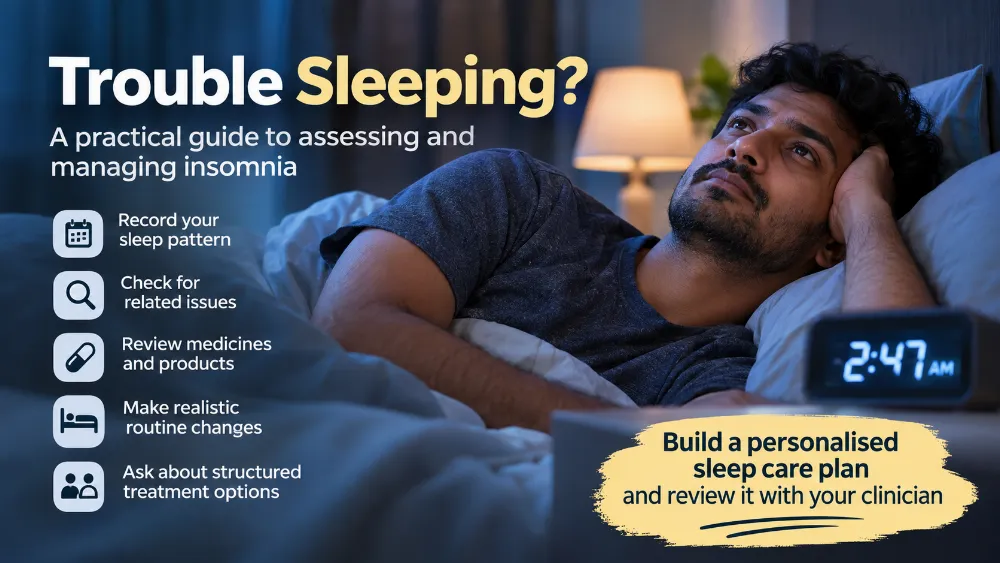
Trouble falling asleep, repeated waking, or waking too early can affect concentration, mood, and safety during the day. When the problem persists, trying a succession of teas, supplements, and sedating products may leave the pattern unclear. A useful assessment explores the sleep routine, daytime effects, medicines, work schedule, and related health concerns. This guide helps adults in Mattannur and Kannur prepare that discussion. The aim is to build a practical care plan and review process rather than promise that one habit or one tablet will solve every sleep problem.
Describe nights and days together
Record approximate bedtime, time to fall asleep, waking episodes, morning rising time, and naps for a manageable period. Include how you feel and function during the day. A diary should be approximate rather than an exercise in watching the clock all night. Note shift work, caregiving, travel, pain, or other factors that affect the schedule. Explain whether the main problem is getting to sleep, staying asleep, or feeling unrefreshed. The clinician needs the pattern and the impact. A single difficult night does not tell the whole story, and an exact number of hours is not the only measure of concern.
Discuss symptoms that suggest another issue
Mention loud snoring, witnessed pauses in breathing, restless legs, pain, mood symptoms, or unusual nighttime behaviour where relevant. Excessive daytime sleepiness may need assessment, especially when driving or hazardous work is involved. Do not drive or operate machinery when you cannot do so safely. If distress becomes severe or you feel at risk of harming yourself, seek urgent support. Sleep problems can coexist with other conditions, so avoid assuming that everything is caused by stress or poor discipline. A broader history helps the clinician decide which concerns need separate assessment or specialist input.
Review products and medicines honestly
Bring prescribed medicines, over-the-counter sleep products, antihistamines, supplements, and any alcohol or stimulant use relevant to sleep. Do not stop a prescribed medicine independently because it might affect sleep. Ask about interactions, next-day sedation, and whether a product is suitable for ongoing use. If you have used borrowed tablets, disclose that without embarrassment. The information matters for safety and assessment. Avoid increasing doses when a product seems less effective. A medicine review can help distinguish side effects, short-term relief, and the need for a different management approach rather than another unsupervised sedative.
Make routine changes achievable
Discuss a consistent rising time, comfortable sleep environment, caffeine timing, and the relationship between bed and wakefulness as part of individual advice. Choose changes that fit your responsibilities. A shift worker or parent caring for a baby may need a different plan from someone with a predictable schedule. Do not turn sleep hygiene into a long list of rules that adds anxiety. Ask which changes are most relevant to your pattern and how long to trial them. At review, report what was possible and what remained difficult. Practical advice should support care rather than imply that persistent insomnia is the patient's fault.
Ask about structured insomnia treatment
Discuss appropriate behavioural or psychological treatment options, including cognitive behavioural therapy for insomnia where available and suitable. Ask what the programme involves, who provides it, and how progress is reviewed. If medication is considered, ask about its purpose, duration, risks, and the plan for reassessment. Treatment choices should reflect the clinical history and preferences. Avoid interpreting a short online video as a complete treatment programme. A structured approach can address patterns maintaining insomnia, while other health issues may need attention alongside it. The useful plan is specific enough to follow and clear about expected review points.
Measure progress through function and pattern
Choose a few outcomes such as less time struggling in bed, fewer disruptive awakenings, improved daytime concentration, or reduced reliance on unreviewed remedies. Avoid judging every night as a success or failure. Bring the diary and treatment details to follow-up. If symptoms change or treatment causes significant problems, contact the team sooner. Coordinate care if several clinicians are involved so medicines and advice remain consistent. A sleep plan should become easier to use over time, not an increasingly complex routine of monitoring and products. Persistent symptoms deserve reassessment rather than a cycle of self-blame and new purchases.
Keep the diary from becoming another sleep task
Choose a simple format and complete it at a consistent daytime moment rather than repeatedly check the clock in bed. Approximate information can still be useful. Record the main pattern and daytime effect, then put the diary aside. If the process increases worry, tell the clinician and ask for a less demanding approach. You should not need to produce perfect data to receive care. Include work schedules, caregiving, pain, and medicines because they can explain practical barriers to a routine. The diary's purpose is to support assessment and review. It should not become a nightly examination in which every wakeful minute feels like a failure.
Explain the difference between tiredness and sleepiness
Describe what happens during the day in ordinary terms. Do you feel low in energy but remain awake, or do you struggle to stay awake during conversation, driving, or work? These experiences may guide different questions. Mention near-misses or safety concerns promptly and avoid hazardous tasks when you cannot perform them safely. Do not minimise the effect because others are also tired. The clinician needs the functional impact to decide what assessment and advice are appropriate. If symptoms have changed since an earlier visit, explain the difference. A clear description can be more informative than a general statement that you need a stronger sleep medicine.
Make treatment access and expectations clear
If structured therapy is recommended, ask about appointments, home tasks, costs, and expected review points. Explain whether shift work, transport, language, or internet access affects participation. If a programme is difficult to follow, discuss adaptation rather than abandon it silently. Ask what improvement should be judged over time and which setbacks are expected to be discussed at review. If medication is part of the plan, keep its instructions and duration clear. Do not add several sedating products to compensate for a difficult night. A practical treatment plan should be understandable and achievable, with an identified route for questions.
Include household support without policing sleep
A partner or relative can help by respecting a routine, sharing responsibilities, or supporting appointments. Avoid asking them to monitor every awakening or repeatedly comment on how little you slept. Share the type of support you want and keep decisions connected to the clinical plan. At follow-up, explain whether the household arrangement made the plan easier to use. Sleep care should reduce pressure and improve function, not introduce a new set of arguments or rigid rules that make evenings more stressful.
Keep the agreed treatment goals visible between review appointments.
Common questions about insomnia
Should I track every minute awake?
No. An approximate, limited diary can be useful. Constant clock-watching may make the experience more stressful without improving the clinical history.
Are herbal sleep products always safe?
No. Discuss ingredients, interactions, and suitability with a healthcare professional, particularly when other medicines or medical conditions apply.
Is sleep hygiene the only treatment?
No. Persistent insomnia may need structured treatment and assessment of related concerns. Ask which approach fits your situation and how it will be reviewed.
Arrange a focused sleep consultation
Check hnc general medicine and relevant doctor information and confirm the current consultation arrangements. Bring a brief sleep history, medicines, and examples of daytime difficulties. Mention snoring, breathing pauses, severe sleepiness, or distress explicitly. A useful visit should identify the assessment needed, agree practical treatment steps, and give a review date. The goal is better sleep-related function with a plan that fits your life and reduces reliance on unsupervised remedies.
Explore hnc departments, check doctor listings, or view appointment information.
Further reading

