
Cervical Screening and HPV: Questions to Bring to a Preventive Gynaecology Visit
24
Nov
Cervical Screening and HPV: Questions to Bring to a Preventive Gynaecology Visit
Key Takeaways & Summary
- A preventive gynaecology visit can feel easier when you know which questions you want answered.
- HPV vaccination helps prevent infection with targeted types, but does not remove the need for recommended screening.
- Consult with the experienced specialists and clinical teams at hnc hospitals for personalized diagnostics and treatment options.
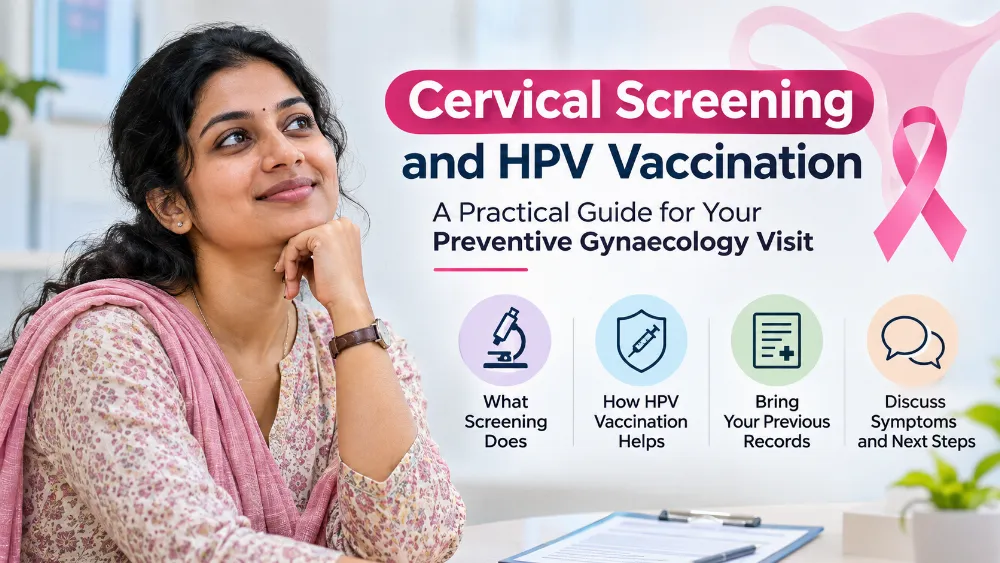
A preventive gynaecology visit can feel easier when you know which questions you want answered. Cervical screening and HPV vaccination are related parts of prevention, but they are different interventions. Bring your previous records and ask which next step applies to you under current guidance.
Understand the purpose of screening
Persistent infection with certain types of human papillomavirus, or HPV, can cause cervical cell changes that may develop into cancer. Screening can identify infection or precancerous changes before symptoms appear, depending on the test used. HPV vaccination helps prevent infection with targeted types, but does not remove the need for recommended screening. Eligibility, test choice and timing should follow national guidance and individual history. WHO: cervical cancer prevention.
Bring the full previous result
If you have been screened before, bring the laboratory report and any follow-up letters. Include the date and location rather than relying on a remembered description such as clear or abnormal. Bring vaccination records if available. Tell the clinician if an earlier examination was painful or difficult, and ask what can be done to make the visit more comfortable. You can ask for an explanation before agreeing to an examination.
Symptoms need their own assessment
Bleeding after sex, between periods or after menopause, and unusual vaginal discharge can be symptoms that need medical assessment. Do not wait for a routine screening date or assume a previous screening result explains a new symptom. Screening is intended for prevention; a consultation about symptoms addresses a different question. WHO symptom and early-detection information.
Make the result pathway clear
Before a test, ask how the result will arrive, how long to wait and whom to contact if you hear nothing. If further assessment is advised, ask what it is intended to clarify and who will arrange it. Keep the actual result with the recommended follow-up date. A positive HPV result should be discussed with the clinician without blame or assumptions about a partner; the practical priority is the appropriate next step.
Plan a visit that respects your needs
For gynaecology advice through hnc, confirm the current appointment schedule and screening availability. If privacy, language or a previous experience makes the visit difficult, mention this when arranging care. Write down your questions beforehand. A useful consultation leaves you knowing whether a test is due, what the procedure involves and how follow-up will happen.
Explore hnc departments, check doctor listings, or view appointment information.

