
Dental Abscess: Why Tooth Pain and Facial Swelling Need Timely Dental Care
23
Nov
Dental Abscess: Why Tooth Pain and Facial Swelling Need Timely Dental Care
Key Takeaways & Summary
- Persistent tooth pain, swelling, or a bad taste can interrupt sleep and eating.
- Medicines may be part of care, but the dentist must determine what treatment addresses the source.
- Consult with the experienced specialists and clinical teams at hnc hospitals for personalized diagnostics and treatment options.
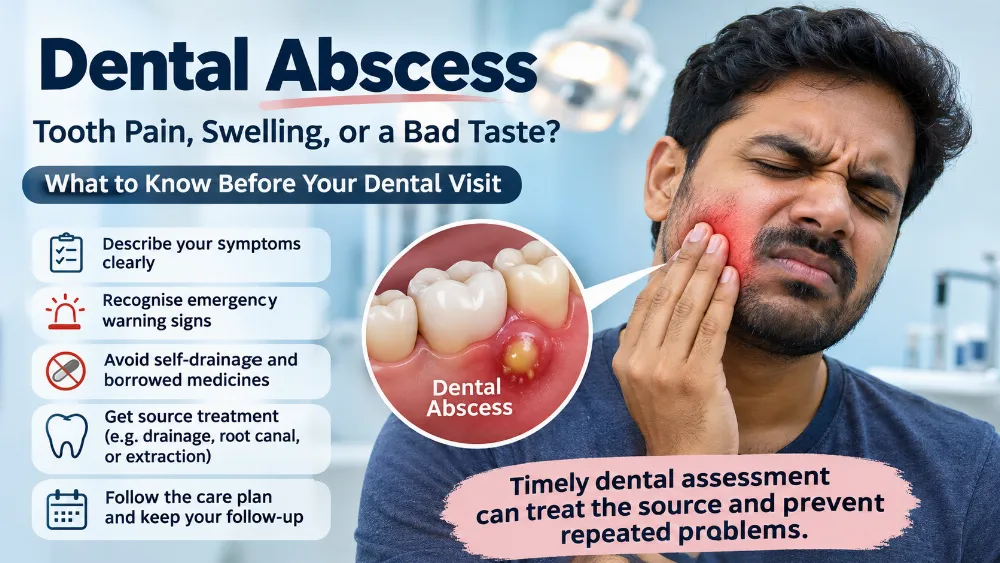
Persistent tooth pain, swelling, or a bad taste can interrupt sleep and eating. A dental abscess is one possible cause and needs dental assessment rather than repeated painkillers alone. Medicines may be part of care, but the dentist must determine what treatment addresses the source. This guide helps patients prepare for that visit and recognise symptoms that require emergency help. For families in Mattannur and Kannur, the useful approach is to arrange timely assessment, bring medicine information, and avoid trying to drain or treat a swollen area at home.
Describe the pain and swelling clearly
Note when the problem started, which tooth or area seems involved, and whether pain changes with biting, temperature, or lying down. Mention swelling, discharge, a bad taste, fever, or difficulty opening the mouth. Bring information about previous dental treatment and any recent injury. If you cannot identify a tooth, describe the location rather than repeatedly press or probe the area. Tell the dentist whether eating and sleeping are affected. This history helps determine the examination and urgency. A pain score alone cannot show the source or extent of a dental problem.
Recognise emergency symptoms
Difficulty breathing or swallowing, substantial swelling involving the mouth or neck, swelling around the eye, or serious deterioration needs urgent emergency assessment. Do not wait for the next routine dental slot if these symptoms occur. Fever with worsening swelling or a person who appears very unwell also requires prompt advice. Mention diabetes, immune suppression, and other significant conditions. A dental problem should not be dismissed because it began with a familiar toothache. Changes in swelling, mouth opening, breathing, or overall condition can alter the level of care required.
Avoid self-drainage and borrowed treatment
Do not puncture, squeeze, or attempt to drain a swollen area. Avoid placing harsh substances or unprescribed preparations against the tooth or gum. Do not take someone else's antibiotics or reuse an incomplete earlier course. Tell the dentist what you have already taken, including pain medicines and supplements. If a product label is unclear, bring the packet. Self-treatment can reduce symptoms temporarily without addressing the source and may create additional problems. The aim is an examination and a clear dental plan, not merely enough relief to postpone the visit repeatedly.
Understand why source treatment matters
Depending on the findings, the dentist may discuss drainage, root canal treatment, extraction, or another appropriate approach. The options depend on the tooth, surrounding structures, and the person's circumstances. Ask what the proposed treatment aims to resolve and what alternatives exist. Do not assume that antibiotics alone will fix every dental abscess or that extraction is inevitable. If more than one visit is needed, clarify the sequence and what to do between appointments. A treatment plan should explain both immediate symptom management and how the underlying dental problem will be addressed.
Review medicines safely
Ask a dentist, clinician, or pharmacist about suitable pain relief and follow the instructions. Mention kidney problems, stomach ulcers, pregnancy, blood thinners, allergies, and other relevant medicines. Do not combine several products with the same ingredient or increase doses because pain is severe. If antibiotics are prescribed, clarify how to take them and what worsening symptoms require urgent contact. Side effects or difficulty taking treatment should be discussed promptly. A medicine schedule is useful when pain and poor sleep make it harder to remember doses. Medication supports the care plan but does not replace the recommended dental treatment.
Plan eating, aftercare, and follow-up
Ask what foods, drinks, oral cleaning, and activity are appropriate after the treatment performed. Follow procedure-specific instructions rather than advice intended for a different dental intervention. If transport or time away from work is needed, arrange it in advance where practical. Keep the follow-up date and contact instructions accessible. Report persistent or increasing swelling, fever, bleeding, or other changes as advised. Once the acute problem is controlled, discuss prevention and any unfinished treatment. A routine preventive plan may include dental review and individual hygiene advice, but it should be based on your oral health findings.
Plan a visit that can address the source
When booking, explain pain, swelling, fever, and any difficulty opening the mouth, swallowing, or breathing. Ask whether the available service can assess the current problem and what to bring. If the required care is unavailable, seek an appropriate alternative rather than repeatedly postpone. Bring earlier dental records and details of medicines taken. Do not assume that a brief prescription visit completes the dental plan. Ask what treatment is needed, whether more than one appointment is expected, and how the next step is arranged. A clear pathway helps prevent temporary symptom improvement from interrupting source treatment and reduces uncertainty about what remains unfinished.
Make cost and time questions part of the decision
If several treatment options are discussed, ask about the sequence, expected visits, total costs where available, and follow-up requirements. Explain work and caregiving constraints so the plan can be made practical. These questions are reasonable and can prevent a treatment course from stopping midway because important details were unclear. Do not choose solely from advertising that describes one option as the only modern solution. Ask how the findings in your tooth affect the choices and what the limitations are. An informed decision connects clinical advice with what you can realistically complete, while keeping urgent infection-related concerns appropriately prioritised.
Coordinate medicines with the dental procedure
Give the dentist a complete medicine list and relevant medical history before treatment. This includes prescribed blood thinners, diabetes treatment, allergies, and any recent antibiotic course. Ask whether another clinician needs to be involved in planning. Do not independently stop a regular medicine because a procedure is proposed. If instructions change, write the current plan clearly and confirm it with the relevant professional. During recovery, avoid adding products suggested by different relatives without review. Accurate medicine information supports safety and makes it easier to interpret side effects or symptoms. It also prevents an earlier prescription from being mistaken for the current treatment plan.
Review the unfinished prevention work
After the urgent problem is controlled, ask what further dental care is needed and how to maintain the treated area. A symptom-free period is not always the end of the plan. Keep follow-up appointments and discuss practical hygiene or dietary advice based on your findings. If fear of dental treatment has caused delays, tell the team so support can be considered. The aim is to make future care more manageable and reduce reliance on emergency visits for problems that remain unresolved.
Confirm the next dental appointment before leaving so the remaining treatment is not forgotten.
Ask which remaining dental treatment should be scheduled after the immediate infection-related concern is addressed.
Common questions about dental abscesses
Can painkillers cure the abscess?
They may provide symptom relief, but they do not establish or treat the source. Dental assessment and the recommended treatment remain important.
Are antibiotics always enough?
No. The dentist decides what addresses the underlying problem. Ask about the complete treatment plan rather than expect medication alone to resolve every case.
Should I wait until the swelling opens by itself?
Do not use that as a strategy. Arrange assessment, and seek emergency care for breathing, swallowing, extensive swelling, or serious deterioration.
Arrange appropriate dental care locally
For tooth pain or swelling, check current dental consultation availability and the relevant hnc listings before travelling. Bring previous dental records, medicines, and allergy information. Describe swelling and any difficulty swallowing or breathing when seeking help so urgency is clear. If the required service is unavailable, use an appropriate alternative rather than delay. The useful outcome is a source-focused treatment plan, safe symptom management, and follow-up that prevents the episode from becoming a repeated cycle of temporary relief.
Explore hnc departments, check doctor listings, or view appointment information.
Further reading

