
Understanding a Cholesterol Report: Questions That Matter Beyond One Number
17
Nov
Understanding a Cholesterol Report: Questions That Matter Beyond One Number
Key Takeaways & Summary
- A cholesterol report can create confusion when several numbers are marked high or low.
- If the test was part of a package, ask how it fits your clinical history.
- Consult with the experienced specialists and clinical teams at hnc hospitals for personalized diagnostics and treatment options.
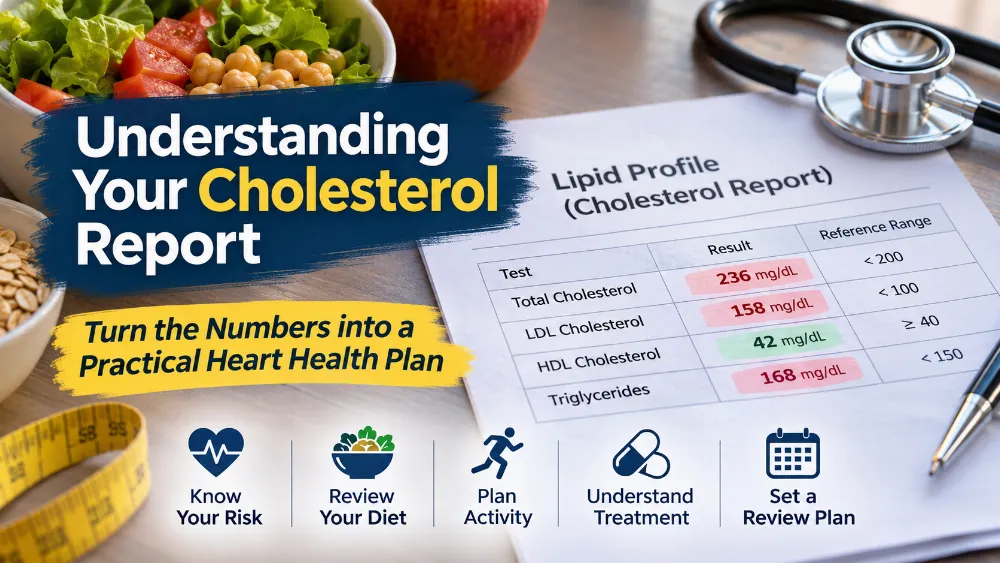
A cholesterol report can create confusion when several numbers are marked high or low. The useful question is how the findings fit your overall cardiovascular risk and what action is appropriate. Age, blood pressure, diabetes, smoking, family history, and previous cardiovascular disease can influence the discussion. This guide helps adults prepare for a consultation without deciding that one food caused the result or that one normal value removes all risk. For patients in Mattannur and Kannur, the goal is a plan that connects the report with practical decisions and a definite review point.
Bring the complete report and context
Take the full lipid report, earlier results, and information about whether you followed the laboratory's preparation instructions. Include the date and any illness or treatment change around the test. Do not compare isolated screenshots without knowing units and context. Ask the clinician to explain the different components and which are most relevant to your situation. A flagged value is a prompt for interpretation, not a diagnosis of an immediate emergency by itself. If the test was part of a package, ask how it fits your clinical history. The report should support a decision rather than remain a collection of unexplained numbers.
Discuss risk factors without blame
Tell the clinician about smoking or tobacco use, blood pressure, diabetes, kidney conditions, previous heart or stroke problems, and relevant family history. Include relatives with cardiovascular disease at a young age where known. These details help personalise advice and treatment choices. Avoid assuming that a person with high cholesterol must have eaten badly or that someone who appears fit cannot have risk. Genetics and medical conditions can matter alongside habits. A respectful discussion makes it easier to share accurate information. The objective is to identify modifiable steps and appropriate treatment, not to assign fault for the result.
Understand why treatment decisions differ
Two people with similar cholesterol values may receive different advice because their wider risk differs. Ask why a medicine is or is not recommended, what benefit is expected, and how it fits other conditions. If treatment is prescribed, clarify dosing, possible side effects, interactions, and review timing. Do not stop a medicine because one later result improves without discussing the plan. Equally, report symptoms or concerns rather than tolerate uncertainty silently. Bring supplements and nonprescription products for review. A treatment decision should be explained in terms you understand and linked to a follow-up plan.
Review the whole eating pattern
Discuss meals, cooking fats, processed foods, portions, fibre sources, and drinks as part of the overall pattern. A dietitian can help adapt familiar foods rather than impose a menu that the household cannot sustain. Avoid concentrating on one ingredient while overlooking repeated habits. Products advertised for cholesterol should be assessed in context rather than treated as replacements for prescribed care. If you have diabetes, kidney disease, or another dietary restriction, say so. Advice should fit those needs together. Choose a few realistic changes and identify how you will maintain them during work, travel, and family gatherings.
Plan activity and tobacco support realistically
Ask about suitable activity for your health and ability, especially if you have symptoms or existing disease. Begin with achievable goals and discuss limitations such as joint pain, unsafe walking routes, or shift work. Do not assume that intense exercise can compensate for every other risk factor. If tobacco use is part of the history, ask about cessation support and follow-up rather than rely only on willpower. A plan should be specific enough to begin and flexible enough to sustain. At review, describe what you actually managed so the advice can be adjusted instead of repeated unchanged.
Make repeat testing a reviewed step
Ask when the lipid profile should be repeated, whether preparation is required, and who will explain the result. The interval depends on the treatment plan and clinical circumstances. Avoid weekly testing simply to reassure yourself. Keep reports together so trends can be interpreted. If a result changes, discuss adherence, medicines, illness, and other context before drawing conclusions. A normal or improved value does not automatically mean the longer-term plan is complete. The useful review connects the report with treatment, practical habits, and overall risk rather than treating the laboratory target as the only outcome.
Bring a realistic account of ordinary habits
Describe a typical weekday and weekend rather than an ideal version of your routine. Include meals, snacks, drinks, activity, tobacco, sleep, and work constraints where relevant. This helps the clinician or dietitian identify practical changes without relying on vague labels. If food is prepared by someone else, discuss which decisions you can influence and whether that person would like to join a nutrition discussion with your agreement. Avoid changing the entire diet immediately before review just to make the account look better. Accurate information is more useful. A plan should start from the routine you actually have and identify steps you can maintain over time.
Ask how family history affects the discussion
Write down known cardiovascular problems in relatives, the relationship, and approximate age when they occurred. Include earlier advice about inherited cholesterol concerns if relevant. Do not assume that every family event has the same cause, and mark uncertain details honestly. The clinician can explain whether the history changes risk assessment, testing, or referral. If additional family assessment is suggested, ask who should receive advice and how that is arranged. A family history can guide care without establishing a diagnosis by itself. The goal is to place your result in context and avoid both unnecessary fear and false reassurance based on relatives' experiences.
Make a medicine decision reviewable
If you start treatment, record the date and instructions, and ask when the response will be assessed. Tell the clinician about concerns regarding side effects, interactions, or long-term use before they lead to silent discontinuation. Bring all products for review, including supplements advertised for cholesterol. If symptoms occur after a change, describe the timing and seek advice rather than decide the cause independently. Ask what to do if access or cost becomes difficult. An informed plan includes a way to raise concerns and reconsider options. The prescription should be connected to your overall risk and follow-up, not treated as a permanent decision that can never be discussed again.
Choose progress measures beyond the report
At review, discuss treatment adherence, tolerable food changes, activity, tobacco support, and any practical obstacles. Improved laboratory values are useful, but the plan also needs to remain sustainable. Ask which actions have the greatest relevance to your risk and what should continue. Avoid replacing one manageable strategy with several dramatic changes because a single value disappoints you. A clear review should help you understand the next step and preserve habits that are actually working.
Bring all earlier reports.
Common questions about cholesterol
Can I judge heart health from one lipid value?
No. Cholesterol is one part of cardiovascular risk. Discuss the complete report and relevant history with the clinician.
Does a healthy diet always remove the need for medicine?
Not necessarily. Treatment decisions depend on the overall risk and individual circumstances. Food changes and medicines may have complementary roles.
Should I stop treatment when the report improves?
Do not alter prescribed treatment independently. Ask how the result fits the ongoing plan and when treatment should be reviewed.
Arrange a focused report review
Check hnc general medicine or cardiology information and confirm appointments in Mattannur or Kannur. Bring the complete report, earlier results, medicines, and a short account of usual food and activity. Ask what action is recommended and how progress will be assessed. A useful consultation turns the report into a personal plan with realistic steps and follow-up. Acute chest pain, severe breathlessness, or other emergency symptoms should be assessed urgently rather than wait for a routine cholesterol discussion.
Explore hnc departments, check doctor listings, or view appointment information.
Further reading

