
How HNC Multi Specialty Care Helps Families Get Complete Treatment in One Place
21
Jul
How HNC Multi Specialty Care Helps Families Get Complete Treatment in One Place
Healthcare is rarely limited to a single illness or one doctor's consultation. Many medical conditions require support from multiple specialists, regular follow-ups, diagnostic tests, and continuous monitoring. When these services are spread across different hospitals or clinics, patients often find themselves repeating their medical history, carrying reports from one place to another, and coordinating appointments on their own.
This fragmented approach can delay diagnosis, increase stress, and make treatment more complicated than it needs to be.
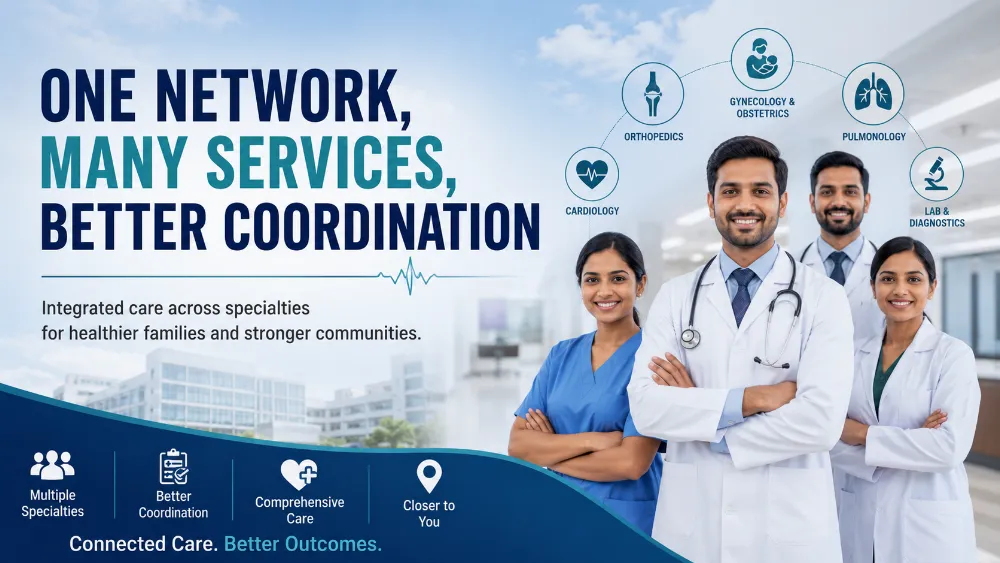
A well-coordinated multi-specialty healthcare network brings different medical specialties together, allowing patients to receive comprehensive care under one system. Instead of navigating separate healthcare providers independently, patients benefit from better communication between departments, streamlined referrals, and more efficient treatment planning.
HNC Hospitals and Clinics is built around this patient-centered approach, connecting multiple specialties, diagnostic services, and healthcare locations to provide continuous medical care for individuals and families.
For people living in Mattannur, Kannur, Kuthuparamba, Irikkur, Kasaragod, and nearby areas, access to coordinated healthcare means faster diagnosis, improved convenience, and better long-term health outcomes.
What Is a Multi-Specialty Hospital?
A multi-specialty hospital provides healthcare services across several medical departments within one integrated system.
Rather than focusing on a single specialty, patients have access to a wide range of healthcare professionals including physicians, surgeons, pediatricians, gynecologists, orthopedic specialists, cardiologists, neurologists, pulmonologists, radiologists, physiotherapists, and many other healthcare experts.
The greatest advantage is that these departments work together whenever a patient's condition requires combined expertise.
Instead of treating one symptom in isolation, the healthcare team focuses on the patient's overall health.
Why Coordinated Healthcare Matters
Many illnesses affect more than one organ system.
Treating only one problem without considering the others may delay recovery or miss important underlying conditions.
Coordinated healthcare allows doctors from different specialties to work together, ensuring patients receive comprehensive evaluation and treatment.
Good outcomes depend on much more than one consultation or one investigation.
Successful healthcare also requires:
- Timely diagnosis
- Clear communication
- Appropriate referrals
- Accurate investigations
- Continuous follow-up
- Patient education
- Long-term monitoring
When these elements work together, patients receive safer, more effective care.
Managing Chronic Diseases More Effectively
People living with long-term medical conditions often require ongoing support from several healthcare professionals.
Diabetes Care
Diabetes affects much more than blood sugar levels.
A patient with diabetes may require:
- General medicine consultation
- Blood sugar monitoring
- Kidney function assessment
- Eye examinations
- Foot care advice
- Dietary counseling
- Heart health evaluation
When these services are coordinated within one healthcare network, patients experience smoother care with fewer delays.
Doctors can monitor progress together and adjust treatment plans as health needs change.
Heart Disease
Patients with hypertension or heart disease often require:
- Regular physician reviews
- Blood pressure monitoring
- Laboratory investigations
- Cardiology consultation
- Lifestyle guidance
- Medication review
Integrated care improves long-term disease management and helps reduce complications.
Kidney Disease
Kidney disease frequently develops alongside diabetes or hypertension.
Coordinated care allows physicians to monitor kidney function while managing blood pressure, blood sugar, medications, and dietary recommendations simultaneously.
This comprehensive approach supports better long-term kidney health.
Pregnancy Care Requires Teamwork
Pregnancy is another area where coordinated healthcare becomes especially valuable.
Expectant mothers may require:
- Regular antenatal checkups
- Ultrasound examinations
- Laboratory investigations
- Nutrition advice
- Blood pressure monitoring
- Diabetes screening
- Emergency obstetric care if required
If complications develop during pregnancy, quick communication between obstetricians, radiology services, laboratory teams, and emergency care providers becomes extremely important.
Having these services connected improves safety for both mother and baby.
Better Care for Children
Children often require care from different specialists as they grow.
For example, a child experiencing repeated breathing problems may benefit from coordinated evaluation involving:
- Pediatricians
- ENT specialists
- Pulmonologists
- Allergy assessment
- Diagnostic investigations
Similarly, children with developmental concerns or nutritional problems may require collaboration between pediatricians and other healthcare professionals.
Integrated care reduces unnecessary delays and provides parents with clearer treatment plans.
Orthopedic Recovery Beyond Surgery
Recovery after fractures, sports injuries, or orthopedic surgery often involves more than one specialist.
Patients may require:
- Orthopedic consultation
- Radiology services
- Physiotherapy
- Pain management
- Follow-up imaging
When rehabilitation services are coordinated, patients experience smoother recovery with better communication between healthcare providers.
Diagnostic Services Improve Decision-Making
Modern healthcare depends heavily on accurate diagnosis.
Laboratory services and radiology departments play a vital role in supporting clinical decisions.
Doctors often require:
- Blood investigations
- Urine analysis
- Ultrasound
- X-rays
- ECG
- Other diagnostic procedures
When these services operate within the same healthcare network, reports become available more efficiently, reducing delays in treatment.
Better Communication Between Specialists
One of the greatest strengths of integrated healthcare is communication.
When specialists work within the same healthcare system, they can review investigations together, discuss complicated cases, and coordinate treatment plans.
This reduces the likelihood of duplicated tests, conflicting advice, or missed information.
Patients also spend less time repeating their medical history during every consultation.
Saving Time for Patients and Families
Healthcare can become overwhelming when appointments are spread across multiple locations.
Patients may need to:
- Carry medical records
- Repeat investigations
- Travel frequently
- Coordinate appointments independently
Integrated healthcare reduces these burdens by organizing services more efficiently.
This is especially valuable for elderly patients, families with young children, and individuals managing multiple chronic conditions.
Better Access Through Multiple Locations
Healthcare should be accessible as well as effective.
Having multiple hospitals and clinics within a connected healthcare network allows patients to receive medical care closer to home while maintaining continuity of treatment.
HNC Hospitals and Clinics has a visible presence across Mattannur, Kasaragod, Kuthuparamba, and Irikkur, helping patients access consultations, follow-up care, and healthcare services without unnecessary travel.
Improved accessibility encourages patients to seek medical attention earlier rather than delaying treatment.
Early consultation often leads to earlier diagnosis and better outcomes.
The Importance of Continuity of Care
Healthcare does not end after one consultation.
Many conditions require regular monitoring over months or years.
Examples include:
- Diabetes
- Hypertension
- Heart disease
- Pregnancy
- Asthma
- Arthritis
- Kidney disease
- Thyroid disorders
Continuous follow-up allows doctors to monitor progress, adjust medications, identify complications early, and provide ongoing health education.
Patients benefit from having their healthcare journey documented within one coordinated system.
Patient-Centered Healthcare
Modern healthcare focuses on treating the whole person rather than simply managing isolated symptoms.
Patient-centered care emphasizes:
- Listening carefully to patient concerns
- Coordinating specialist care
- Providing clear explanations
- Supporting informed decision-making
- Encouraging preventive healthcare
- Building long-term doctor-patient relationships
This approach improves patient confidence and satisfaction while supporting better medical outcomes.
Preventive Healthcare Within an Integrated System
Multi-specialty hospitals also play an important role in preventive medicine.
Routine health checkups may identify conditions such as:
- Diabetes
- High blood pressure
- High cholesterol
- Kidney disease
- Fatty liver
- Anemia
Once identified, patients can be referred quickly to the appropriate specialists without unnecessary delays.
Early intervention often prevents disease progression and reduces future complications.
Healthcare That Grows With Your Family
Healthcare needs change throughout life.
Children require vaccinations and developmental care.
Young adults focus on preventive health.
Pregnant women need maternity services.
Adults may develop lifestyle-related diseases.
Older adults often require ongoing monitoring for chronic conditions.
An integrated healthcare network supports every stage of life, making it easier for families to receive consistent, coordinated care from childhood through older age.
HNC Hospitals and Clinics: Connected Care for Better Health
HNC Hospitals and Clinics brings together multiple medical specialties, experienced healthcare professionals, diagnostic services, and patient-focused care through an integrated healthcare network. Patients benefit from access to General Medicine, Pediatrics, Gynecology & Obstetrics, Orthopedics, Cardiology, Neurology, Pulmonology, Radiology, Physiotherapy, Laboratory Services, Emergency Care, and several other specialties that work together whenever comprehensive care is needed.
With healthcare facilities serving Mattannur, Kasaragod, Kuthuparamba, Irikkur, and nearby communities, HNC aims to provide accessible medical services closer to where patients live. This connected approach supports smoother referrals, faster diagnosis, coordinated treatment planning, and reliable follow-up, helping patients receive comprehensive healthcare without unnecessary delays.
Whether someone requires preventive health screening, specialist consultation, chronic disease management, pregnancy care, pediatric services, orthopedic rehabilitation, or emergency medical attention, coordinated care within one healthcare network offers greater convenience and continuity.
Conclusion
Healthcare becomes more effective when different medical specialties work together instead of functioning separately. Many health conditions involve multiple systems of the body, making coordinated care essential for accurate diagnosis, timely treatment, and long-term recovery.
A connected healthcare network reduces unnecessary repetition, improves communication between specialists, streamlines referrals, and makes it easier for patients to access comprehensive medical services. It also supports preventive healthcare, chronic disease management, maternity care, pediatric services, rehabilitation, and ongoing follow-up.
For individuals and families seeking reliable, patient-centered healthcare, a multi-specialty network provides not only convenience but also confidence that every stage of care is connected. By bringing together experienced doctors, modern diagnostics, and multiple specialties under one coordinated system, patients receive comprehensive support throughout their healthcare journey.
Frequently Asked Questions
1. What is a multi-specialty hospital?
A multi-specialty hospital offers medical services across several specialties such as General Medicine, Pediatrics, Gynecology, Orthopedics, Cardiology, Neurology, Pulmonology, Surgery, Radiology, and Physiotherapy. Patients can access different specialists within one coordinated healthcare system.
2. Why is coordinated healthcare better than visiting separate clinics?
Coordinated healthcare allows doctors from different specialties to communicate, share medical information, avoid unnecessary repeat tests, and develop a unified treatment plan, making healthcare more efficient and convenient for patients.
3. Can a multi-specialty hospital help manage long-term conditions like diabetes?
Yes. Chronic conditions such as diabetes often require support from multiple departments, including General Medicine, Ophthalmology, Kidney Care, Nutrition, Cardiology, and Laboratory Services. A multi-specialty hospital helps coordinate these services for better long-term care.
4. Is a multi-specialty hospital suitable for routine health checkups?
Absolutely. Preventive health screenings, vaccinations, laboratory investigations, imaging services, and specialist consultations can all be coordinated within one healthcare network, making routine health management easier.
5. When should I choose a multi-specialty hospital instead of a single-specialty clinic?
A multi-specialty hospital is particularly beneficial if your condition may require multiple specialists, diagnostic tests, surgery, rehabilitation, emergency care, or long-term follow-up. It provides continuity of care and easier access to comprehensive medical services in one integrated system.

