
COPD Flare-Ups: Creating an Action Plan Before Breathing Gets Worse
08
Nov
COPD Flare-Ups: Creating an Action Plan Before Breathing Gets Worse
Key Takeaways & Summary
- Someone living with chronic obstructive pulmonary disease may become accustomed to breathlessness, making a worsening episode harder to recognise.
- A written action plan helps define what is normal for you, which changes require contact, and when urgent care is needed.
- Consult with the experienced specialists and clinical teams at hnc hospitals for personalized diagnostics and treatment options.
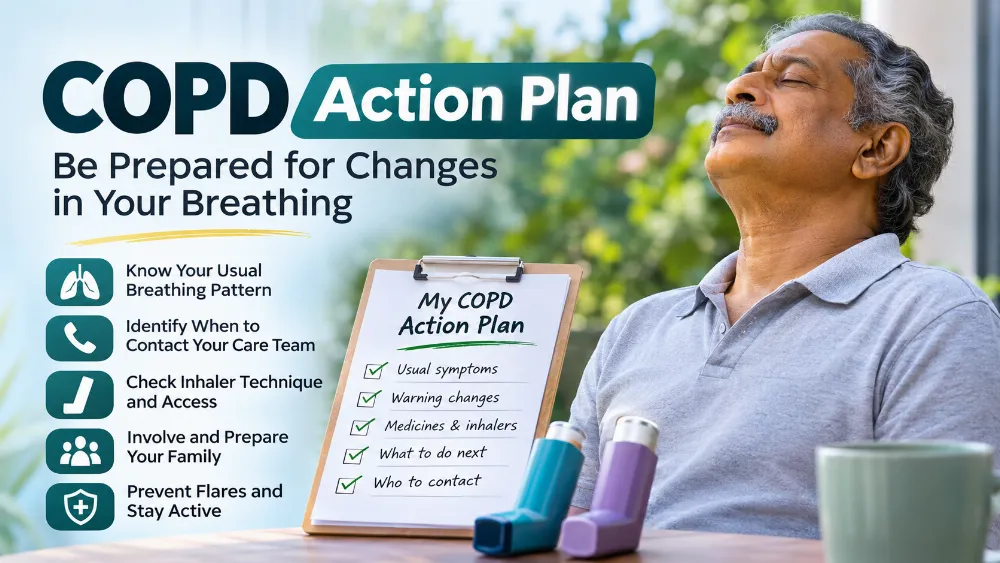
Someone living with chronic obstructive pulmonary disease may become accustomed to breathlessness, making a worsening episode harder to recognise. A written action plan helps define what is normal for you, which changes require contact, and when urgent care is needed. It should be agreed with the treating team and reviewed when treatment changes. This guide focuses on organising that conversation, checking inhaler use, and making family support practical. It does not provide a universal rescue prescription. COPD care in Mattannur or Kannur should connect daily management with a reliable response when symptoms change.
Establish your usual breathing pattern
Describe a normal day: walking distance, stairs, cough, sputum, sleep, and activities that require a pause. Note the medicines and support you normally use. This gives the team a baseline against which changes can be assessed. If everyday function has gradually declined, raise that separately rather than assume it is inevitable. A brief record can help, but constant monitoring is not necessary unless recommended. Tell the clinician what matters most, such as walking to a nearby shop or managing household tasks. The plan should use language that you and caregivers can recognise in real life.
Define changes that need contact
Ask about increased breathlessness, cough, sputum changes, fever, or reduced ability to manage normal tasks. Severe breathlessness, inability to speak normally, blue or grey colour, confusion, chest pain, or serious deterioration requires urgent assessment. Do not wait for a routine clinic appointment if breathing becomes substantially worse. If your plan includes home measurements, learn what values mean in your circumstances and what action they require. A number should not override visible deterioration. The team should explain whom to contact during routine hours and what to do outside them so the plan remains usable at night or on weekends.
Review inhaler technique and access
Bring every inhaler and any spacer to the appointment. Ask the clinician or pharmacist to watch you use the device and correct technique. Different devices have different steps, so a demonstration matters. Explain difficulties with hand strength, breath coordination, reading labels, or remembering doses. Check which inhaler is regular treatment and which has another role in your plan. Avoid switching devices or sharing them without advice. Ensure you know how to obtain replacements before supplies run out. A treatment list is useful only when the person can access and use the medicines correctly during ordinary days and worsening symptoms.
Clarify any rescue treatment instructions
Some patients may be given an individual plan involving specific medicines for worsening symptoms. Ask exactly when to start them, what monitoring or contact is required, and what lack of improvement means. Do not use another patient's antibiotics or steroids. If you have an older rescue pack, review whether it is still appropriate and within expiry. Keep written instructions with the medicines. Tell the team about allergies, diabetes, and other conditions that may affect treatment decisions. A rescue plan is not permission to manage severe breathing difficulty at home or to avoid contacting the service when the instructions require it.
Discuss prevention and rehabilitation
Ask about smoking cessation support where relevant, vaccinations suitable for your circumstances, and pulmonary rehabilitation or appropriate activity. Explain concerns about exercise, transport, cost, or fatigue that may affect participation. Advice should be practical and connected to your goals. At home, reduce smoke exposure and review tasks that repeatedly worsen symptoms. Do not buy oxygen or change prescribed oxygen use independently. If oxygen is part of treatment, follow the specialist instructions and safety guidance. Prevention and rehabilitation should complement medicines and the action plan rather than be treated as a one-time lecture at diagnosis.
Make caregiver support specific
With consent, a family member can learn the baseline symptoms, medicine roles, and urgent warning signs. Agree who maintains records and helps with transport if needed. Caregivers should avoid forcing activity during a worsening episode or assuming that reassurance alone can manage severe breathlessness. At review, describe what happened during the last flare-up and where the plan was difficult to follow. Bring discharge records after any hospital stay. The team can use those details to refine instructions and coordinate follow-up. A clear division of responsibilities reduces confusion without removing the patient's independence.
Use the last flare-up to improve the next plan
Bring records from the most recent worsening episode and explain how it started. Which changes were noticed first, who was contacted, and what made following the plan difficult? Include delays, unclear medicine instructions, transport problems, and recovery after treatment. This is not an exercise in assigning blame. It helps the team identify where the pathway can be improved. Ask whether the current thresholds and contact arrangements still fit your condition. If hospital care was needed, share the discharge summary so treatment changes are reconciled. A plan should evolve with actual experience rather than remain an old sheet that no longer matches the medicines or support available.
Make the medicine list useful during urgent care
Keep inhaler names, regular doses, allergies, prescribed oxygen information where relevant, and any rescue instructions together. Include recent changes and the treating service's contact details if advised. A caregiver should know where the record is stored. Do not rely solely on the colour of an inhaler, since devices and brands may change. Bring the medicines to review so technique and labels can be checked. During an urgent episode, the record can help the team understand treatment without repeated uncertain descriptions. It supports assessment but should never delay seeking help for severe breathing difficulty or reduced responsiveness.
Plan activity between episodes
Discuss ordinary tasks and suitable rehabilitation while stable, not only during a flare-up. Explain whether shopping, bathing, stairs, or leaving home has become harder. Ask how to pace activity and what progression is appropriate. If fear of breathlessness leads to avoiding all movement, raise that concern. The team may suggest structured support or further assessment according to your needs. Practical barriers such as transport or cost should be discussed early. A plan that preserves function between episodes can be more meaningful than focusing only on the next emergency. Review progress through activities that matter to you and report gradual decline rather than accept it without discussion.
Check that helpers understand escalation
Ask a caregiver to explain what they would do if breathing worsened. Clarify that severe symptoms require urgent care even when rescue medicines are available. Save contact routes and identify transport options. Review the plan after medicine changes or a hospital stay. Shared understanding reduces hesitation and prevents conflicting advice during a stressful episode. It should support the patient's choices and make help accessible when needed.
Check expiry dates when reviewing rescue supplies with the treating team.
Ask the team to check that the written action plan matches every inhaler and rescue medicine currently prescribed.
Common questions about COPD action plans
Is more breathlessness always an expected part of COPD?
No. A change from your usual pattern deserves attention according to the agreed plan. Severe deterioration requires urgent assessment.
Can I use a neighbour's rescue medicines?
No. Rescue treatment must be prescribed and explained for your circumstances. Medicines and thresholds differ between patients.
Is a written plan useful if I know my inhalers?
Yes. It connects daily treatment with actions for worsening symptoms, contact arrangements, and urgent care. Review it when circumstances change.
Arrange a respiratory review locally
Check hnc pulmonology and doctor information and confirm the current consultation location and schedule. Bring inhalers, the existing plan, earlier tests, and recent hospital records. Ask for a demonstration and repeat the instructions in your own words. The useful outcome is an accessible plan that supports ordinary function and makes escalation clear. Severe breathing difficulty should be assessed through available urgent services rather than wait for the preferred outpatient doctor.
Explore hnc departments, check doctor listings, or view appointment information.
Further reading

