
Diabetes and Family Celebrations: Planning Meals Without Extreme Restrictions
05
Nov
Diabetes and Family Celebrations: Planning Meals Without Extreme Restrictions
Key Takeaways & Summary
- Family gatherings can make diabetes meal planning feel like a choice between enjoyment and control.
- Practical planning should prevent both excessive restriction and unreviewed treatment changes based on guilt about food.
- Consult with the experienced specialists and clinical teams at hnc hospitals for personalized diagnostics and treatment options.
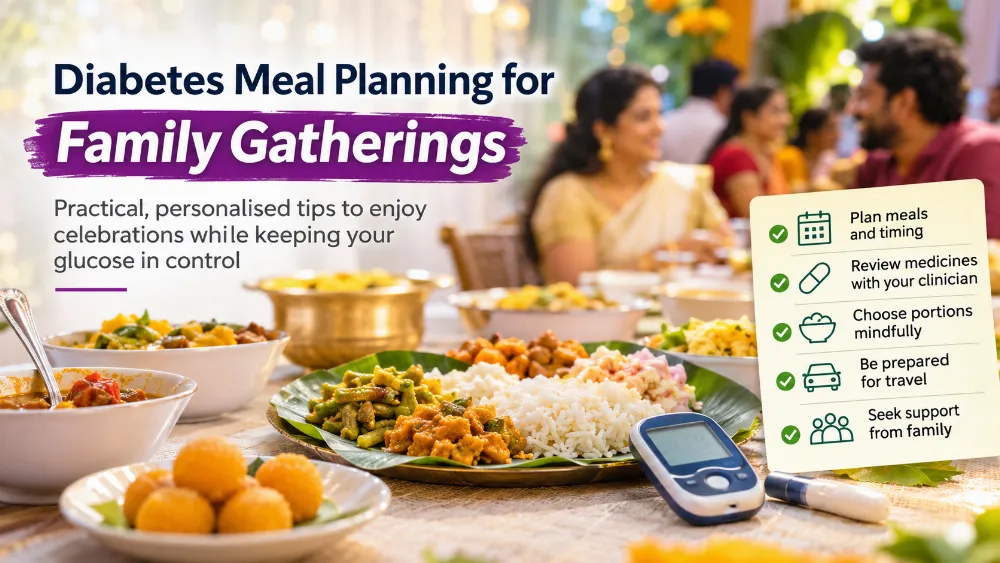
Family gatherings can make diabetes meal planning feel like a choice between enjoyment and control. A more useful approach is to plan the meal, timing, medicines, and support before the event. There is no need to turn one celebration into a crash diet or assume that a product labelled sugar-free can be eaten without consideration. This guide helps adults discuss practical decisions with a clinician or dietitian. It is particularly relevant when meal times change, several dishes are served, or travel and activity differ from the usual routine. The plan should fit your treatment and preferences.
Begin with the usual treatment plan
Confirm how medicines relate to meals and what to do if meal timing changes. People using insulin or medicines that can cause low glucose need specific advice rather than simply skip food to compensate for a celebration. Do not alter doses independently unless the treating team has provided instructions for that situation. Bring a realistic example of the event: a late lunch, travel, a long ceremony, or a buffet. The clinician can help translate the existing plan into the day ahead. Practical planning should prevent both excessive restriction and unreviewed treatment changes based on guilt about food.
Think about the complete meal
Look at portions, carbohydrate sources, vegetables, protein, drinks, and repeated servings together. A sweet dish is only one part of the pattern. Ask a dietitian how familiar foods can fit your goals without imposing an unfamiliar menu on the household. Avoid labels such as good and bad that make every decision feel moral. If you enjoy a particular food, discuss a realistic portion and what else is served. A balanced plan can include preferences while accounting for glucose management. It should be understandable enough to use at the table without calculating every ingredient under social pressure.
Review drinks and product labels
Sweetened drinks can be easy to overlook during a long gathering. Choose beverages deliberately and discuss appropriate options within your plan. Products marked diabetic-friendly, natural, or sugar-free may still contain carbohydrate, calories, or ingredients that affect tolerance. Read the relevant nutrition information rather than rely on the front label. Do not assume that honey, jaggery, or fruit-based sweeteners remove the need for portion awareness. If alcohol is involved, ask about medicine interactions and low glucose risk. Advice should reflect your treatment, medical history, and usual food pattern, not a universal rule borrowed from another person.
Plan for changed timing and travel
Carry medicines and monitoring supplies according to the instructions given, and keep them accessible rather than packed where they cannot be reached. Discuss storage needs before a journey. If a meal may be delayed, ask what suitable backup food to carry. A family member can help by sharing the schedule and avoiding pressure to keep postponing eating. Do not use a long fast as punishment for the previous meal. If you become unwell, follow your personalised illness plan and seek advice where needed. Travel planning should make treatment easier, not turn the day into constant anxious checking.
Use glucose readings as information
Follow the monitoring schedule advised by your team. If readings change around celebrations, note meal timing, medicines, activity, and symptoms so review can be meaningful. Avoid judging your overall health from one unexpected value or reacting with an unsupervised extra dose. Ask what readings or symptoms require contact and what can be discussed at routine review. If monitoring becomes distressing, mention that. The purpose is to guide safe decisions and understand patterns. A record is most useful when connected to a clear action plan, rather than used as evidence that enjoying a family meal was a failure.
Build supportive family habits
Share only the information you want others to know. Ask for practical support such as keeping regular meal options available, offering unsweetened drinks, or respecting portion decisions. Relatives should avoid policing every bite or insisting that one extra serving cannot matter. Equally, the person with diabetes should not feel expected to eat separately at every occasion. A dietitian can help plan meals that work for the wider household. Choose a few changes that can continue after the event. Sustainable routines are more useful than a strict celebration-day rule that leaves the next week unplanned.
Discuss a real menu with the dietitian
Bring an example of the foods likely to be served rather than request a generic festival diet. Include drinks, snacks before the meal, repeated servings, and the usual timing. The dietitian can help identify practical choices and portions that fit your treatment and preferences. If the family cooks together, discuss changes that do not require preparing an entirely separate meal. Consider budget, availability, and cultural preferences. A useful plan should feel possible at the actual gathering. It should not depend on a perfect menu or require you to explain every choice publicly. Clear options make it easier to participate without turning the event into constant calculation.
Prepare for social pressure kindly
Decide how you want to respond when someone insists on another serving or comments on your diabetes. A brief explanation such as following a meal plan can be enough. You do not have to disclose your medicine details or glucose readings to justify a choice. Ask a trusted relative to support the plan if that would help. At the same time, avoid describing foods in a way that makes family members feel blamed. The practical goal is respectful choice and participation. If pressure remains difficult, discuss strategies with the clinician or dietitian so the plan accounts for the social setting as well as the nutrition.
Return to routine without compensation
After the event, resume the agreed meal, medicine, and manageable daily activity routine rather than impose a severe restriction. If readings or symptoms raise concern, follow the action plan and discuss them with the team. Record the relevant context if a pattern needs review. Do not use one meal to judge your entire effort or decide that treatment has failed. A sustainable approach includes ordinary variation and a way to learn from it. If celebrations frequently disrupt the plan, bring several examples to the next consultation. The team can help adjust practical strategies instead of repeating advice that does not fit your life.
Make the next event easier
Keep notes on what worked: meal timing, available options, supplies, or family support. Use them to plan the next gathering rather than start from scratch. If travel or an unexpected delay created difficulty, ask for specific advice about that situation. The aim is a repeatable approach that becomes simpler over time. Personalised planning should support both safety and participation in the routines that matter to you.
Common questions about celebration meals
Should I skip a meal to make room for sweets?
Do not use meal skipping as an automatic strategy, especially with medicines that may cause low glucose. Ask your treating team about a suitable plan.
Are sugar-free desserts unlimited?
No. Review the overall nutrition information, portion, and your meal plan. A marketing label does not describe the complete effect of a food.
Should I exercise intensely afterward to compensate?
Avoid treating exercise as punishment. Discuss appropriate activity, timing, and any monitoring or medicine precautions that apply to your treatment.
Prepare a practical nutrition consultation
For diabetes meal planning in Mattannur or Kannur, check hnc dietitian and general medicine information and confirm current appointments. Bring your medicine schedule, relevant glucose records, and examples of typical foods and upcoming events. Ask for a plan that fits the family menu, budget, and meal timing. The useful outcome is a manageable set of decisions and clear safety instructions. Enjoyment and long-term routines can be considered together when advice is personalised and the household understands how to support it.
Explore hnc departments, check doctor listings, or view appointment information.
Further reading

