
Sinus Problems vs Common Cold: How to Tell the Difference
23
Jul
Sinus Problems vs Common Cold: How to Tell the Difference
A blocked nose is one of the most common health complaints affecting people of all ages. Many assume it is simply part of a common cold and expect it to disappear within a few days. In many cases, that is exactly what happens. Viral infections are a frequent cause of nasal congestion and usually improve with rest and supportive care.
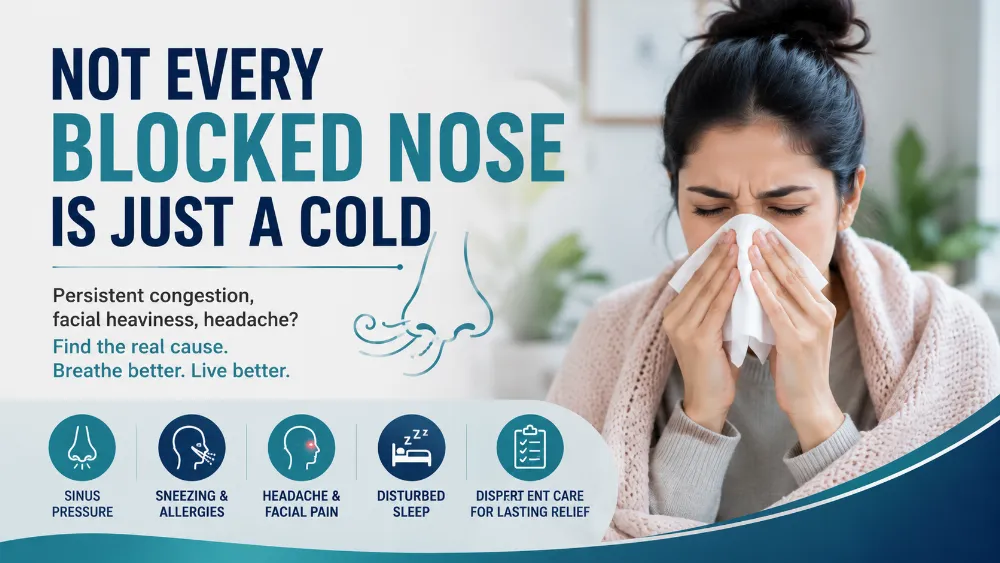
However, not every blocked nose is caused by a cold. When nasal blockage keeps returning, lasts for several weeks, disturbs sleep, causes facial pain or pressure, or is associated with thick nasal discharge, it may indicate an underlying sinus problem, allergy, or another ear, nose, and throat (ENT) condition.
Repeated nasal symptoms can affect concentration, work performance, sleep quality, and overall quality of life. Fortunately, early evaluation by an ENT specialist can help identify the underlying cause and provide appropriate treatment.
For people living in Mattannur, Kannur, Kuthuparamba, Irikkur, Kasaragod, and nearby areas, understanding the difference between a simple cold and a sinus condition can help ensure timely medical care and lasting relief.
What Causes a Blocked Nose?
A blocked nose occurs when the tissues lining the nasal passages become swollen or filled with excess mucus.
Several conditions can cause nasal congestion, including:
- Common cold
- Allergic rhinitis
- Sinus infection
- Nasal polyps
- Deviated nasal septum
- Air pollution
- Dust exposure
- Seasonal allergies
- Viral infections
- Chronic sinus inflammation
Because many of these conditions produce similar symptoms, medical evaluation is sometimes necessary to determine the exact cause.
Common Cold vs. Sinus Problems
The symptoms of a common cold and sinus disease often overlap, making it difficult for patients to distinguish between them.
Common Cold
A viral cold usually develops gradually and may include:
- Runny nose
- Sneezing
- Mild sore throat
- Mild cough
- Nasal congestion
- Low-grade fever
- Watery nasal discharge
Most colds improve within seven to ten days without specific treatment.
Sinus-Related Conditions
Sinus problems often involve additional symptoms such as:
- Persistent blocked nose
- Facial heaviness
- Pressure around the eyes or cheeks
- Thick yellow or green nasal discharge
- Reduced sense of smell
- Headache
- Post-nasal drip
- Bad breath
- Ear fullness
- Symptoms lasting beyond ten days
- Repeated episodes throughout the year
Although viral infections can temporarily affect the sinuses, persistent or recurring symptoms deserve further evaluation.
What Are the Sinuses?
The sinuses are air-filled spaces located within the bones of the face and skull.
Healthy sinuses produce mucus that drains naturally into the nasal passages.
When drainage becomes blocked because of infection, allergy, or swelling, mucus accumulates inside the sinuses, creating pressure and discomfort.
This condition is known as sinusitis.
Acute and Chronic Sinusitis
Sinusitis can be classified based on how long symptoms last.
Acute Sinusitis
Acute sinusitis usually develops after a viral infection or common cold.
Symptoms often include:
- Facial pain
- Nasal congestion
- Thick mucus
- Fever
- Reduced smell
Most cases improve with appropriate treatment.
Chronic Sinusitis
When sinus symptoms continue for more than twelve weeks or repeatedly return despite treatment, chronic sinusitis may be present.
Patients often experience:
- Persistent nasal blockage
- Ongoing post-nasal drip
- Facial pressure
- Reduced smell
- Frequent infections
Chronic sinusitis requires comprehensive medical evaluation.
The Role of Allergies
Allergies are one of the most common causes of long-term nasal symptoms.
Common allergy triggers include:
- Dust mites
- Pollen
- Pet dander
- Mold
- Smoke
- Air pollution
Typical allergy symptoms include:
- Sneezing
- Itchy nose
- Itchy eyes
- Watery eyes
- Clear nasal discharge
- Nasal blockage
Untreated allergies may increase the likelihood of repeated sinus problems.
Why Repeated Nasal Congestion Should Not Be Ignored
Many people repeatedly purchase over-the-counter nasal sprays or cold medications whenever symptoms occur.
While these medicines may provide temporary relief, they do not always treat the underlying cause.
Repeated self-medication without proper diagnosis can delay appropriate treatment and, in some cases, worsen symptoms.
Persistent nasal blockage may affect:
- Sleep quality
- Breathing
- Concentration
- School performance
- Workplace productivity
- Physical exercise
- Overall comfort
Seeking medical advice helps identify the true cause rather than simply treating symptoms repeatedly.
Other Causes of Long-Term Nasal Blockage
Several structural conditions can contribute to chronic nasal obstruction.
Deviated Nasal Septum
The nasal septum divides the two nasal passages.
If it is significantly bent or displaced, airflow may become restricted.
Symptoms include:
- Difficulty breathing through one side
- Frequent sinus infections
- Snoring
- Persistent blockage
Nasal Polyps
Polyps are soft, non-cancerous growths inside the nasal passages or sinuses.
They may cause:
- Persistent congestion
- Reduced smell
- Post-nasal drip
- Recurrent sinus infections
Medical treatment or surgery may be recommended depending on severity.
How ENT Specialists Diagnose Sinus Problems
Diagnosis begins with a detailed discussion of symptoms.
The doctor may ask about:
- Duration of symptoms
- Frequency of episodes
- Previous treatments
- Allergy history
- Family history
- Exposure to dust or smoke
- Sleep problems
This is followed by a physical examination of the nose, ears, and throat.
Depending on individual circumstances, additional investigations may include:
- Nasal endoscopy
- Allergy evaluation
- Imaging studies
- Laboratory investigations
These help determine the most appropriate treatment plan.
Treatment Depends on the Cause
Not every blocked nose requires antibiotics.
Treatment varies according to the underlying condition.
Possible approaches include:
- Allergy management
- Saline nasal irrigation
- Prescription nasal sprays
- Medicines to reduce inflammation
- Treatment for bacterial infection when appropriate
- Lifestyle modifications
- Environmental trigger control
Some structural problems may require surgical correction after careful evaluation.
Simple Ways to Support Nasal Health
Healthy daily habits may reduce nasal irritation and improve sinus drainage.
Helpful measures include:
- Drinking adequate water
- Using saline nasal rinses if advised
- Avoiding cigarette smoke
- Reducing exposure to dust
- Maintaining good indoor ventilation
- Washing hands regularly
- Managing allergies appropriately
- Seeking early medical advice for persistent symptoms
These measures support both nasal and overall respiratory health.
When Should You See an ENT Specialist?
Medical evaluation is recommended if you experience:
- Nasal blockage lasting more than ten days
- Frequent sinus infections
- Persistent facial pain
- Thick nasal discharge
- Recurrent headaches associated with congestion
- Difficulty breathing through the nose
- Loss of smell
- Symptoms affecting sleep
- Repeated need for over-the-counter medications
Early diagnosis often leads to more effective treatment and prevents long-term complications.
ENT Care at HNC Hospitals
At HNC Hospitals, ENT specialists evaluate a wide range of nasal and sinus conditions, including chronic nasal congestion, sinusitis, allergic rhinitis, nasal polyps, deviated nasal septum, recurrent throat infections, and other ear, nose, and throat disorders. Each patient undergoes a thorough clinical assessment to identify the underlying cause of persistent symptoms rather than simply treating temporary discomfort.
Treatment plans are individualized and may include allergy management, medications, nasal care advice, diagnostic investigations, and further evaluation when necessary. The goal is to improve breathing, restore comfort, enhance sleep quality, and reduce the frequency of recurring sinus-related problems.
By combining experienced ENT specialists with modern diagnostic facilities, HNC Hospitals helps patients receive timely and effective care for both acute and chronic nasal conditions.
Conclusion
A blocked nose is not always caused by a simple cold. While many cases improve within a few days, persistent or recurring nasal congestion, facial pressure, headaches, post-nasal drip, and reduced sense of smell may indicate an underlying sinus condition, allergy, or structural problem requiring medical evaluation.
Rather than relying repeatedly on temporary medications, identifying the true cause allows more effective treatment and long-term relief. Early consultation with an ENT specialist can improve breathing, reduce infections, restore sleep quality, and prevent chronic sinus problems from affecting everyday life.
If nasal symptoms continue longer than expected or keep returning, seeking professional medical advice is an important step toward better respiratory health.

