
Fever After Floodwater Exposure: A Practical Guide to Leptospirosis Assessment
08
Oct
Fever After Floodwater Exposure: A Practical Guide to Leptospirosis Assessment
Key Takeaways & Summary
- Cleaning a flooded yard, working in wet soil, or walking through muddy water can become relevant when fever develops afterward.
- Severe illness, jaundice, markedly reduced urine, breathing difficulty, confusion, or bleeding requires urgent care.
- Consult with the experienced specialists and clinical teams at hnc hospitals for personalized diagnostics and treatment options.
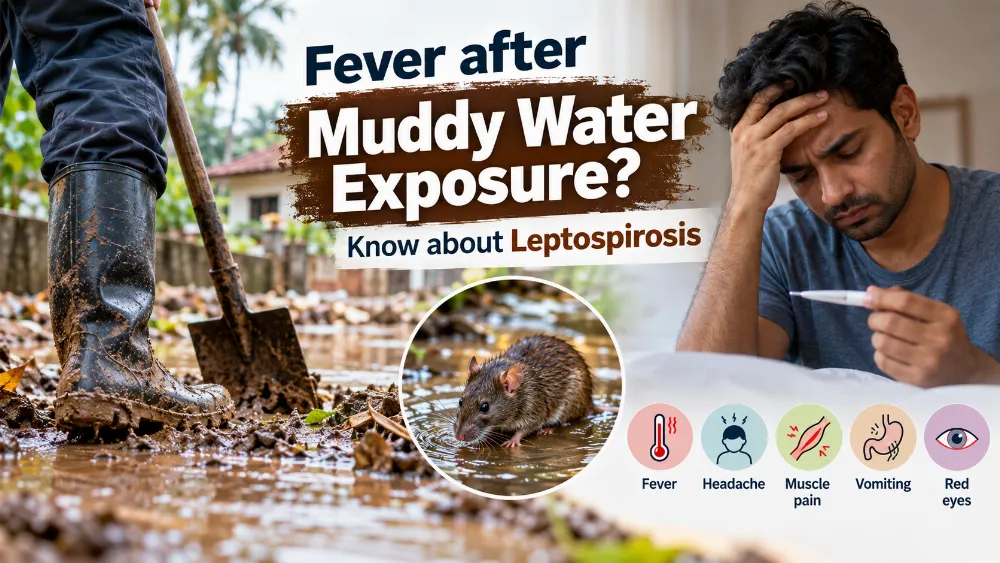
Cleaning a flooded yard, working in wet soil, or walking through muddy water can become relevant when fever develops afterward. Leptospirosis is one infection a clinician may consider after exposure to water or soil contaminated by infected animal urine. Not every fever after rain is leptospirosis, and similar symptoms can have other causes. The useful action is to seek assessment and explain the exposure clearly. This guide helps families and outdoor workers in Kannur prepare that history, recognise deterioration, and avoid turning a possible exposure into a self-prescribed course of antibiotics.
Make the exposure history specific
Record when the contact happened, what you were doing, and whether water reached broken skin, the eyes, or the mouth. Note footwear, cuts, wounds, and the duration of contact. Include work involving drainage, agriculture, waste, animals, or flood cleanup. You do not need to prove where contamination occurred; the clinician needs a realistic account of possible exposure. If other people involved in the same work have become ill, mention that too without assuming a shared diagnosis. Write the timeline before the appointment, because symptoms and busy workdays can make dates difficult to recall accurately.
Describe the illness without choosing the diagnosis
Tell the clinician when fever began and whether there are headaches, muscle aches, vomiting, diarrhoea, red eyes, or other symptoms. Note any change in urination, breathing, alertness, or skin and eye colour. These observations help determine the urgency and scope of assessment. They cannot confirm a diagnosis at home. Severe illness, jaundice, markedly reduced urine, breathing difficulty, confusion, or bleeding requires urgent care. Do not wait until every symptom on an internet checklist appears. The clinician may need to consider several infections or noninfectious problems, and accurate observations are more useful than a confident label.
Explain previous treatment and medical conditions
Bring all medicines taken since symptoms started, including fever tablets, antibiotics, herbal preparations, and prescribed long-term medicines. Note doses and timing if you can. Tell the team about pregnancy, kidney disease, liver disease, diabetes, and allergies. Previous antibiotic use can matter when interpreting the course and planning investigations. If you cannot recall a medicine name, bring the packet or a clear photograph of its label. Avoid taking someone else's remaining tablets. A medicine that was appropriate for one person's illness may be unsuitable for another, and partial treatment can complicate assessment without providing reliable protection.
Let testing follow the clinical question
Testing decisions depend on the exposure, symptoms, timing, examination, and local clinical approach. Ask which conditions are being considered and what each test is intended to establish. Confirm whether a repeat assessment is needed if the first results do not fully explain the illness. Keep samples and appointments within the instructed timetable rather than choosing tests independently from a list. If blood or urine investigations are requested, ask how and when results will be reviewed. A negative or inconclusive early result should be discussed with the clinician in context. Do not use one report as permission to ignore worsening symptoms.
Follow treatment instructions carefully
If treatment is prescribed, ask when to start, how to take it, and what should prompt reassessment. Share any concern about side effects or difficulty keeping medicines down. Do not change the dose to match a neighbour's prescription. If you miss a dose, ask a pharmacist or clinician how to proceed rather than doubling it automatically. Keep a simple written plan that separates regular medicines from new treatment. For someone advised to recover at home, clarify suitable fluid intake and activity, particularly when there are existing kidney or heart problems. Treatment should be linked to a named follow-up contact and a review date.
Plan safer work after recovery
Review the task that led to exposure and identify practical changes: appropriate footwear, protective clothing, covering cuts, washing after contact, and reducing avoidable contact with potentially contaminated water. Employers and household members can help by making protective supplies available before cleanup begins. If work continues during wet conditions, ask the clinician or relevant local public health service about specific preventive advice. Do not start preventive antibiotics based on a social media message or reuse an old prescription. Prevention depends on the exposure and individual circumstances. A plan that people can follow consistently is more valuable than a rule that is impossible during their actual work.
Keep follow-up focused on recovery
At review, explain whether fever, pain, appetite, stamina, and urination are improving. Bring earlier results in order and mention any new symptom, even if it seems unrelated. Ask when returning to strenuous work is reasonable and whether further checks are needed. If several clinicians have been involved, show each the current treatment list to avoid conflicting instructions. A family member can help with transport and records if the patient remains weak. Recovery should be assessed through symptoms, function, and any investigations recommended by the treating team. Do not return to heavy outdoor work solely because the temperature has fallen.
Give the clinician a practical work description
Job titles can conceal exposure. A gardener, delivery worker, cleaner, or householder may have quite different contact with water, mud, animals, or waste. Describe the task in ordinary terms: clearing a drain, moving wet materials, handling animal areas, or spending hours in soaked footwear. Include whether wounds were covered and whether protective equipment was available. This account should be factual rather than an admission of fault. If the work must continue, ask how to reduce avoidable exposure and what temporary adjustments are sensible during illness. A realistic task description makes prevention advice more applicable than a general instruction to avoid all wet conditions.
Plan a return that respects remaining symptoms
After improvement, consider whether you can manage travel, standing, lifting, and outdoor work safely. Tell the clinician if dizziness, weakness, poor appetite, or reduced stamina remains. Ask whether further review is needed before strenuous duties. An employer may be able to offer a temporary adjustment, but medical details should be shared according to your preferences and applicable requirements. Keep follow-up dates visible so a busy return does not interrupt care. If symptoms recur, bring the earlier timeline and treatment details instead of describing the episode as a completely new fever. Continuity helps the team understand the course and decide whether the plan needs changing.
If the clinician advises further testing, arrange how the results will be discussed before returning to your normal work duties. Keep the original exposure dates available, because an accurate timeline remains useful even when the symptoms begin to improve.
Ask whether continuing outdoor work requires temporary adjustments while the investigation and recommended treatment are underway.
Common questions about exposure-related fever
Does walking through rainwater mean I will become ill?
No. Exposure does not establish infection. However, contact with potentially contaminated water is relevant information if symptoms develop and should be shared during assessment.
Should everyone who cleaned the same site take antibiotics?
Do not share treatment or prescribe for the group. Individual medical advice and local public health guidance should determine whether any preventive or treatment measures are appropriate.
Is this always an emergency?
The urgency depends on the person's symptoms and condition. Severe deterioration, jaundice, breathing difficulty, reduced urine, confusion, or bleeding needs urgent assessment rather than routine booking.
Seek assessment with a clear timeline
For fever after muddy water or floodwater exposure in Mattannur, Kannur, or nearby areas, arrange a suitable medical assessment and explicitly mention the contact. Check hnc location and doctor information if you plan to use its services, then confirm availability. Bring the exposure timeline, medicine packets, and earlier reports. Do not delay urgent care while trying to find the perfect specialist. A precise history helps the medical team consider the right possibilities and plan follow-up that matches the illness.
Explore hnc departments, check doctor listings, or view appointment information.
Further reading

