
Child Development Checkpoints: When Milestones Need a Paediatric Review
18
Sep
Child Development Checkpoints: When Milestones Need a Paediatric Review
Key Takeaways & Summary
- Myth versus reality: Popular assumptions can make a health concern harder to navigate.
- Good care also checks what the patient understands, can afford and can realistically do at home.
- Consult with the experienced specialists and clinical teams at hnc hospitals for personalized diagnostics and treatment options.
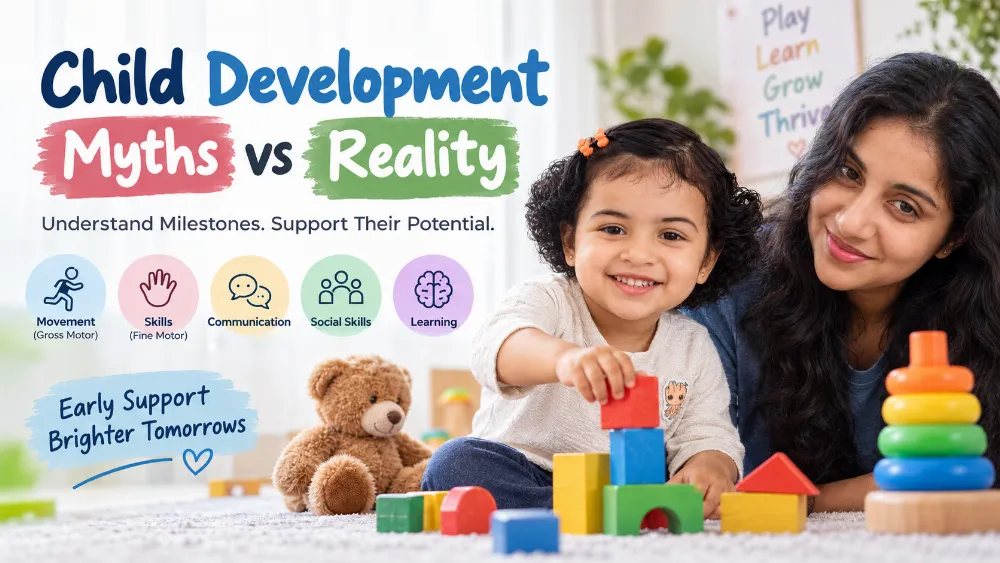
Myth versus reality: Popular assumptions can make a health concern harder to navigate. For parents and caregivers who have questions about a child’s speech, movement, play, behaviour or learning, a clearer starting point is evidence, context and an individual assessment. Milestones help families notice how a child moves, communicates, plays, learns and relates to others. They are not a race and do not predict a child’s worth or future intelligence. Children develop at different rates, yet persistent delay, loss of a skill or a cluster of concerns deserves a paediatric assessment because early support can improve participation and family confidence.
Parents can begin with hnc’s Paediatrics department for a whole-child review and appropriate referral. The information below supports preparation and informed discussion; it does not diagnose a condition or replace instructions from the treating team.
Key points at a glance
- Observe several developmental areas, not one skill.
- Loss of an acquired ability is always important.
- Hearing and vision can affect communication and learning.
- Screening identifies risk; it is not a final diagnosis.
- Early intervention can begin while evaluation continues.
Development has several connected domains
Myth and reality often separate at development has several connected domains, where details matter more than labels. Gross motor skills include sitting and walking, while fine motor skills involve grasping, drawing and using objects. Language includes both understanding and expression; social development includes shared attention, imitation, play and relationships. Good care also checks what the patient understands, can afford and can realistically do at home. A child may be strong in one domain and slower in another, so the overall pattern is more informative than comparing one milestone with another child. Clear safety-net advice completes the section by defining what should happen if recovery does not follow the expected path.
Watch the direction of progress
A useful way to approach watch the direction of progress is to separate observation from assumption. A child who steadily acquires new skills may simply follow a different pace, while a plateau across several areas deserves closer review. Loss of words, eye contact, walking ability, hand use or social engagement after it was established is a red flag at any age. Write what the child previously did, when it changed and whether illness, injury or seizure-like events occurred. The patient should be able to state what is being watched, why it matters and which change would bring the review forward. That disciplined sequence reduces guesswork and makes the next decision easier to explain.
Speech delay needs hearing in the conversation
In the patient journey, speech delay needs hearing in the conversation becomes a practical decision point. Children learn language by hearing and interacting, and repeated ear problems or unnoticed hearing loss can affect speech development. Understanding, gestures, social attention and the sounds a child makes help distinguish different communication patterns. A careful assessment relates these facts to age, other illnesses, medicines and functional needs instead of treating one detail in isolation. Avoid waiting solely for school entry if caregivers, nursery staff or a clinician repeatedly notices a delay. The aim is a plan the patient can follow, not merely a technical conclusion in the record.
Screen time is not a substitute for interaction
The first question around screen time is not a substitute for interaction is what the pattern is actually telling the clinical team. Young children learn from responsive conversation, face-to-face play, shared books, movement and predictable routines. The practical meaning is that the same symptom can lead to different decisions in different people. Screens can displace sleep and interaction, particularly when used passively or during meals, though they are rarely the sole explanation for a significant delay. Follow age-appropriate guidance and focus on adding rich interaction rather than blaming caregivers. Write down the agreed action and the expected time course so improvement or deterioration can be judged fairly. Reassessment is important when the pattern changes, because an earlier explanation may no longer fit.
What developmental assessment may involve
Myth and reality often separate at what developmental assessment may involve, where details matter more than labels. The paediatrician reviews pregnancy and birth, growth, nutrition, illnesses, family history, behaviour, sleep and the child’s skills across settings. Hearing, vision, neurological examination and standardised screening may be advised, with referral to speech, occupational, physiotherapy or psychology services when appropriate. Good care also checks what the patient understands, can afford and can realistically do at home. Screening results indicate whether further evaluation is needed; they do not label a child by themselves. Clear safety-net advice completes the section by defining what should happen if recovery does not follow the expected path.
Early support is practical, not pessimistic
A useful way to approach early support is practical, not pessimistic is to separate observation from assumption. Intervention can help communication, movement, self-care, play and caregiver strategies even while the exact diagnosis remains uncertain. Goals should be functional and specific, such as requesting help, tolerating dressing or joining classroom activity. Families benefit from coordinated priorities rather than an exhausting schedule of unrelated therapies. The patient should be able to state what is being watched, why it matters and which change would bring the review forward. That disciplined sequence reduces guesswork and makes the next decision easier to explain.
Preparing for a useful consultation
Bring the child’s health and vaccination records, teacher observations, previous hearing or vision results and short videos of behaviours that may not appear in clinic. Note what the child can do independently and with help. Use the appointment page for a planned paediatric review; the hnc Clinical Psychology department may support selected developmental or behavioural evaluations. Seek urgent care for sudden loss of skills, weakness, repeated seizures or altered consciousness. Ask three closing questions: what is the working explanation, what should happen next, and which change needs faster help? Keep the written answer with the prescription or report so another caregiver can follow the same plan.
Putting the plan into practice
A written timeline is especially valuable for using developmental milestones as observation tools without turning childhood into a competition. Include the first change, what made it better or worse, treatments already tried and the effect on sleep, work, school, mobility or eating. This turns a vague concern into information that can guide a safer decision.
The main takeaway
Milestones are prompts for attentive observation, not deadlines for judgment. When concern persists, a respectful whole-child assessment can identify hearing, vision, medical, developmental or environmental factors and connect the family with useful support. Acting early means creating opportunity, not assuming the worst. Services, schedules and eligibility can change, so confirm current details directly with hnc before a planned visit.
Frequently Asked Questions
Should every child walk or speak at exactly the same age?
No. There is a normal range, but significant delay, several affected areas or lack of continued progress should be discussed with a paediatrician.
Is loss of a skill different from delayed development?
Yes. Losing a previously acquired skill is particularly important and should be assessed promptly, even if the child developed normally before.
Can hearing loss look like speech delay?
Yes. A child may hear some sounds but miss speech detail, so hearing assessment is often part of evaluating communication delay.
Does developmental screening diagnose autism or another condition?
Screening identifies children who may need detailed assessment. Diagnosis requires broader clinical evaluation and information from development across settings.
Can therapy start before a final diagnosis?
Often yes. Functional support for communication, movement or daily skills can begin while medical and developmental evaluation continues.

