
Anaesthesia Without the Mystery: What Happens Before, During and After Surgery
17
Aug
Anaesthesia Without the Mystery: What Happens Before, During and After Surgery
Key Takeaways & Summary
- Patient journey: Think of this article as a care journey for patients and caregivers who want a calm, accurate explanation of anaesthesia around an operation.
- Modern anaesthesia is an active medical process: the anaesthesia team assesses risk, chooses an approach, monitors breathing and circulation, treats pain and nausea, and guides recovery.
- Consult with the experienced specialists and clinical teams at hnc hospitals for personalized diagnostics and treatment options.
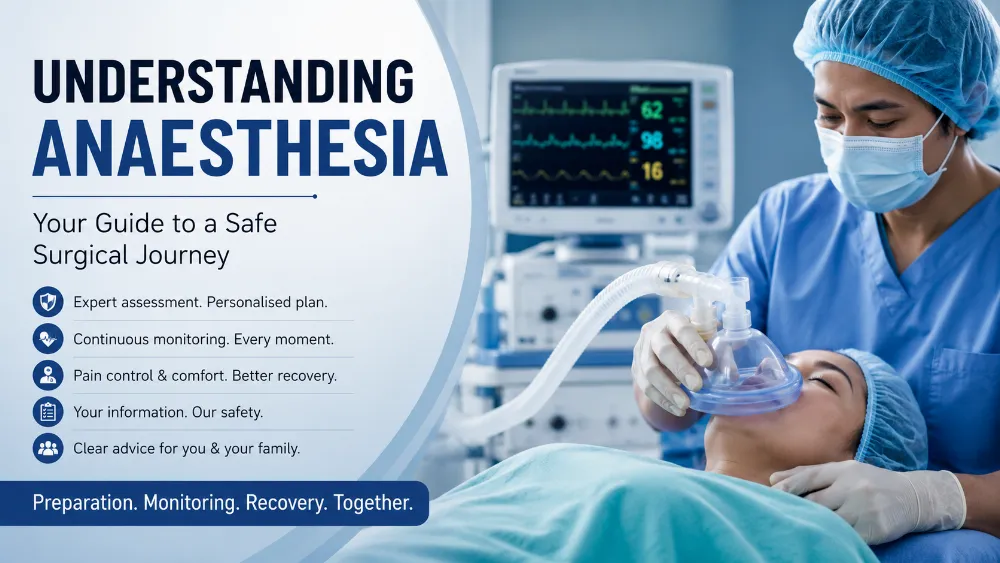
Patient journey: Think of this article as a care journey for patients and caregivers who want a calm, accurate explanation of anaesthesia around an operation. For many patients, anaesthesia is more worrying than the operation because it happens outside their awareness. Modern anaesthesia is an active medical process: the anaesthesia team assesses risk, chooses an approach, monitors breathing and circulation, treats pain and nausea, and guides recovery. Safety depends on both clinical preparation and accurate information from the patient.
The hnc Anesthesia department is the appropriate source for instructions tailored to the planned procedure and the patient’s health. The information below supports preparation and informed discussion; it does not diagnose a condition or replace instructions from the treating team.
Key points at a glance
- Disclose every medicine, allergy and previous anaesthesia problem.
- Follow the exact fasting instructions provided.
- Anaesthesia type is selected for the procedure and patient.
- Continuous monitoring continues throughout the operation.
- Arrange an adult escort when discharge advice requires one.
The pre-anaesthetic assessment
In the patient journey, the pre-anaesthetic assessment becomes a practical decision point. The anaesthesia clinician reviews medical history, airway, previous operations, allergies, medicines, pregnancy possibility and relevant examination or test results. Heart, lung, kidney, liver, bleeding and sleep-related conditions can influence the safest technique and monitoring plan. A careful assessment relates these facts to age, other illnesses, medicines and functional needs instead of treating one detail in isolation. Share details honestly, including tobacco, alcohol, recreational substances, herbal products and any family history of a serious anaesthetic reaction. The aim is a plan the patient can follow, not merely a technical conclusion in the record.
Fasting is a safety instruction, not a ritual
The first question around fasting is a safety instruction, not a ritual is what the pattern is actually telling the clinical team. Food or liquid in the stomach can enter the lungs when protective reflexes are reduced, causing a dangerous aspiration event. The practical meaning is that the same symptom can lead to different decisions in different people. The allowed timing differs for solids, breast milk and clear fluids and may change with the procedure or patient condition. Follow the hospital’s written instruction rather than a generic internet rule; if fasting was broken, tell the team instead of concealing it. Write down the agreed action and the expected time course so improvement or deterioration can be judged fairly. Reassessment is important when the pattern changes, because an earlier explanation may no longer fit.
General, regional and local approaches
Myth and reality often separate at general, regional and local approaches, where details matter more than labels. General anaesthesia produces controlled unconsciousness, while regional methods such as spinal or nerve blocks numb a larger body region. Local anaesthesia numbs a smaller area, and sedation may be added in selected procedures to reduce anxiety or awareness. Good care also checks what the patient understands, can afford and can realistically do at home. The best method depends on surgery, health, urgency, patient preference and clinical judgement; sometimes techniques are combined for better pain control. Clear safety-net advice completes the section by defining what should happen if recovery does not follow the expected path.
What monitoring does during surgery
A useful way to approach what monitoring does during surgery is to separate observation from assumption. Anaesthesia professionals continuously interpret oxygen level, heart rhythm, blood pressure, breathing, temperature and other measures appropriate to the case. Medicines, fluids, ventilation and positioning are adjusted as the operation progresses. This is why anaesthesia is not simply an injection at the beginning; it is moment-to-moment management that continues until the patient is safely transferred. The patient should be able to state what is being watched, why it matters and which change would bring the review forward. That disciplined sequence reduces guesswork and makes the next decision easier to explain.
Recovery and common temporary effects
In the patient journey, recovery and common temporary effects becomes a practical decision point. Drowsiness, shivering, sore throat, nausea, dizziness or temporary numbness can occur depending on the technique and procedure. Recovery staff monitor breathing, circulation, pain, alertness and the return of movement or sensation before discharge or ward transfer. A careful assessment relates these facts to age, other illnesses, medicines and functional needs instead of treating one detail in isolation. Report severe pain, chest discomfort, breathing difficulty, persistent vomiting or new weakness promptly rather than assuming every symptom is expected. The aim is a plan the patient can follow, not merely a technical conclusion in the record.
Going home safely after day surgery
The first question around going home safely after day surgery is what the pattern is actually telling the clinical team. Judgement and coordination may remain affected even when a person feels awake, so driving and important decisions are commonly restricted for a defined period. The practical meaning is that the same symptom can lead to different decisions in different people. An adult escort, access to prescribed medicines and clear written instructions make the first night safer. Know whom to call, what food or activity is allowed, and which wound, pain, fever or breathing changes require urgent review. Write down the agreed action and the expected time course so improvement or deterioration can be judged fairly. Reassessment is important when the pattern changes, because an earlier explanation may no longer fit.
Preparing for a useful consultation
Create a complete medicine list with doses and the last time each was taken. Ask specifically about diabetes medicines, insulin, blood thinners and blood-pressure tablets because instructions vary; do not stop them without direction. Patients planning an operation can use the hnc appointment page and review relevant specialties through the department directory. Remove jewellery or dentures only when the team instructs, and bring requested reports. Ask three closing questions: what is the working explanation, what should happen next, and which change needs faster help? Keep the written answer with the prescription or report so another caregiver can follow the same plan.
Putting the plan into practice
A written timeline is especially valuable for preparing safely for anaesthesia and understanding the perioperative journey. Include the first change, what made it better or worse, treatments already tried and the effect on sleep, work, school, mobility or eating. This turns a vague concern into information that can guide a safer decision.
The main takeaway
Understanding anaesthesia replaces vague fear with practical preparation. The most helpful patient actions are simple: disclose health information, follow fasting and medicine instructions, ask questions and arrange safe recovery support. The final anaesthetic plan belongs to the qualified team caring for the individual patient. Services, schedules and eligibility can change, so confirm current details directly with hnc before a planned visit.
Frequently Asked Questions
Will I definitely receive general anaesthesia?
No. The technique depends on the procedure, health, urgency and patient factors. Local, regional, sedation or combined approaches may be suitable.
Can I drink water before surgery?
Only according to the specific fasting instruction given by the hospital. Rules vary, so do not rely on a general timetable from another patient.
Should I stop blood thinners before an operation?
Never stop them independently. The surgeon and anaesthesia team balance bleeding and clotting risks and provide medicine-specific instructions.
Why must I mention snoring or sleep apnoea?
Sleep-disordered breathing can affect airway management, opioid sensitivity and postoperative monitoring, so the anaesthesia team needs to know.
When can I drive after anaesthesia?
Follow the discharge instruction for your anaesthetic and procedure. Sedation and general anaesthesia commonly require an escort and a temporary driving restriction.

