
When Snoring and Poor Sleep Need Medical Attention
05
Aug
When Snoring and Poor Sleep Need Medical Attention
Snoring and Sleep-Related Breathing Problems: When Should You Get Checked?
A good night's sleep is essential for physical health, mental wellbeing, concentration, and everyday performance. Yet many people do not realize that their sleep may not be as restful as it should be. Snoring, frequent waking, morning tiredness, dry mouth, daytime sleepiness, and difficulty concentrating are often considered minor problems. Some people simply accept them as a normal part of getting older, being tired, or having a busy lifestyle.
However, persistent sleep-related symptoms can sometimes indicate an underlying problem that needs medical attention. In some cases, breathing may become partially or completely restricted during sleep, reducing the quality of rest and affecting the body's normal oxygen supply.
Sleep-related breathing problems can affect both adults and children. Identifying the possible cause early can help patients receive appropriate evaluation and treatment.
For people in Mattannur and nearby areas, an ENT evaluation can be an important first step when snoring or breathing difficulties during sleep become frequent or disruptive.
Why Snoring Should Not Always Be Ignored
Snoring happens when air movement through the nose and throat becomes restricted during sleep, causing surrounding tissues to vibrate. Occasional snoring can happen to almost anyone, particularly when a person is very tired, has a blocked nose, or sleeps in certain positions.
Persistent or loud snoring, however, deserves more attention.
Snoring may sometimes be associated with factors such as:
-
Nasal congestion or blockage
-
Enlarged tonsils or adenoids
-
Excess body weight
-
Structural differences in the nose or throat
-
Sleeping position
-
Mouth breathing
-
Certain lifestyle factors
-
Sleep-related breathing disorders
Snoring alone does not necessarily mean that a person has a serious medical condition. But when it occurs together with other symptoms, medical evaluation may be appropriate.
Common Symptoms of Sleep-Related Breathing Problems
Sleep problems are not always obvious to the person experiencing them. In fact, someone may be unaware that their breathing is repeatedly interrupted during sleep.
A family member or sleeping partner may notice symptoms before the person does.
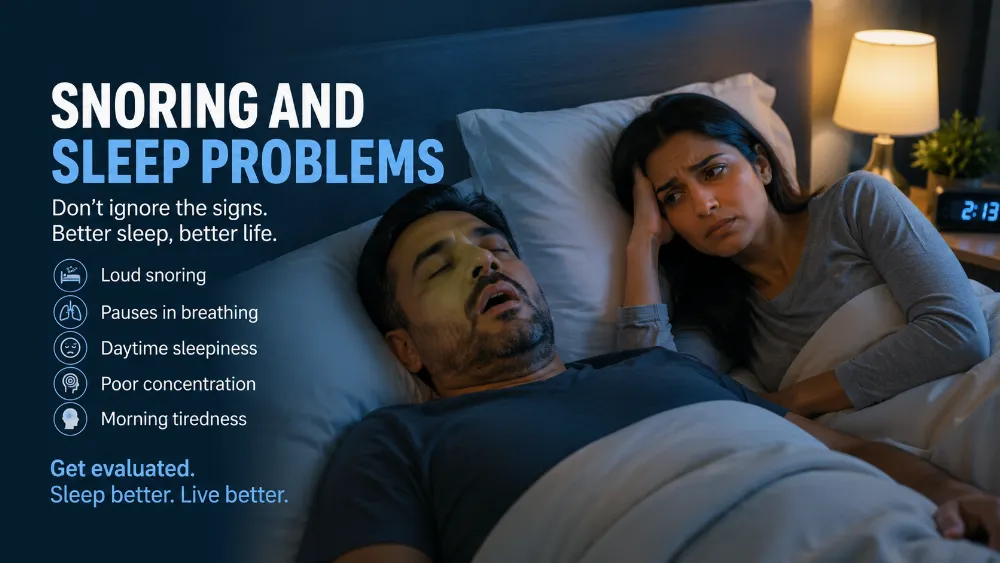
Some common warning signs include:
Loud or Frequent Snoring
Regular, loud snoring can be one of the most noticeable signs of disturbed breathing during sleep. If snoring is happening almost every night, particularly if it is becoming louder or more frequent, it may be worth discussing with a doctor.
Pauses in Breathing
A sleeping partner may notice periods when the person appears to stop breathing briefly, followed by a loud gasp, choking sound, or sudden change in breathing.
This should not be ignored. Repeated pauses in breathing during sleep can be a sign of a sleep-related breathing disorder and require appropriate medical assessment.
Waking Up Tired
Sleeping for seven or eight hours does not always guarantee good-quality sleep.
A person may spend enough time in bed but still wake up feeling exhausted if their sleep is repeatedly interrupted.
If someone regularly wakes up feeling tired despite apparently getting enough sleep, it may be useful to investigate the quality of their sleep.
Morning Headache or Dry Mouth
Some people wake up with a dry mouth or unpleasant feeling in the throat, particularly when they regularly breathe through their mouth during sleep.
Morning headaches may also occur in some people with sleep-related breathing problems, although there can be many other causes of headaches.
Persistent symptoms should therefore be discussed with a healthcare professional rather than self-diagnosed.
Excessive Daytime Sleepiness
Feeling sleepy during the day despite getting adequate time for sleep can affect work, studies, driving, and daily activities.
Some people may find themselves struggling to stay awake during meetings, while watching television, reading, or even while travelling.
Daytime sleepiness should be taken seriously, particularly when it is persistent.
Difficulty Concentrating
Poor-quality sleep can affect concentration, memory, alertness, and mood.
Adults may notice reduced productivity at work, while children may show changes in attention, school performance, or behaviour.
Improving the underlying sleep problem may help improve daytime functioning when poor sleep is contributing to these difficulties.
What Can Cause Sleep-Related Breathing Problems?
There is no single cause behind snoring or disturbed breathing during sleep.
The problem can sometimes be related to the nose, throat, airway structure, body weight, or other health factors.
Nasal Blockage
A blocked or congested nose can make it difficult to breathe comfortably through the nose during sleep.
Conditions such as allergies, nasal inflammation, a deviated nasal septum, or other causes of nasal obstruction may contribute to mouth breathing and snoring.
An ENT examination can help determine whether there is a structural or inflammatory problem affecting nasal airflow.
Enlarged Tonsils and Adenoids
Enlarged tonsils or adenoids can narrow the airway, particularly in children.
Children who frequently snore, breathe through their mouths, sleep restlessly, or experience other breathing-related symptoms may need an assessment to determine whether enlarged tonsils or adenoids are contributing to the problem.
Weight-Related Factors
Excess body weight can contribute to narrowing of the upper airway in some people. This can increase the likelihood of snoring and certain sleep-related breathing disorders.
Weight management may therefore form part of a broader treatment approach when appropriate.
However, it is important to remember that sleep-related breathing problems can also occur in people who are not overweight.
Sleep Problems in Children
Snoring in children is sometimes dismissed as harmless. Occasional snoring during a cold or temporary nasal congestion may not be concerning, but regular heavy snoring deserves attention.
Parents should consider discussing the problem with a healthcare professional if a child frequently:
-
Snores loudly
-
Sleeps with their mouth open
-
Breathes through the mouth during sleep
-
Appears to struggle with breathing while asleep
-
Wakes frequently
-
Sleeps restlessly
-
Is unusually sleepy during the day
-
Has difficulty concentrating
-
Shows unexplained changes in behaviour
Children may not be able to explain that they are experiencing poor-quality sleep. Instead, the effects may appear as irritability, tiredness, difficulty concentrating, or changes in behaviour.
An appropriate evaluation can help determine whether the symptoms are related to the nose, tonsils, adenoids, airway, or another underlying issue.
Parents searching for a child snoring doctor in Irikkur or nearby areas should consider seeking professional medical assessment rather than assuming that persistent snoring is simply a normal childhood habit.
When Should Adults Get Checked?
Adults should consider medical evaluation when snoring or other sleep-related symptoms become regular or begin affecting everyday life.
You may want to discuss the symptoms with a doctor if you:
-
Snore loudly almost every night
-
Wake up repeatedly during the night
-
Wake up feeling tired despite sufficient sleep
-
Experience persistent daytime sleepiness
-
Wake with a dry mouth regularly
-
Have witnessed pauses in breathing during sleep
-
Wake suddenly gasping or choking
-
Have difficulty concentrating during the day
-
Frequently breathe through your mouth while sleeping
These symptoms do not automatically mean that you have a particular sleep disorder. A healthcare professional can evaluate the symptoms and determine whether further testing or specialist assessment is required.
How ENT Evaluation Can Help
An ENT specialist can examine the nose, throat, tonsils, and other structures involved in breathing.
The evaluation may help identify problems such as nasal obstruction, enlarged tonsils, or other structural factors that could contribute to snoring or breathing difficulties.
Depending on the symptoms, the doctor may recommend additional evaluation or testing to understand what is happening during sleep.
Treatment depends entirely on the underlying cause. Some patients may benefit from treating nasal problems, while others may require weight management, changes in sleep habits, specialized sleep evaluation, or other medical treatment.
The important point is that there is no single "snoring treatment" that is suitable for everyone.
Better Sleep Can Improve Daily Life
Sleep affects much more than how rested you feel in the morning.
Consistently poor sleep can make it harder to concentrate, work efficiently, exercise, study, and maintain a positive mood.
For children, good-quality sleep is particularly important because childhood is a period of rapid physical and mental development.
When an underlying sleep-related breathing problem is identified and appropriately managed, improving sleep quality may help a person feel more energetic and function better during the day.
Do Not Rely Only on Internet Remedies
There are many products and home remedies promoted online for snoring. Some people try changing their sleeping position, using nasal products, losing weight, or purchasing anti-snoring devices.
Some lifestyle changes may be useful depending on the individual, but persistent symptoms should not be managed solely through trial and error.
In particular, loud snoring accompanied by witnessed breathing pauses, gasping, choking, or significant daytime sleepiness deserves proper medical evaluation.
Finding the underlying cause is more useful than simply trying to make the snoring quieter.
Finding ENT Care in Mattannur and Nearby Areas
People searching for snoring treatment in Mattannur, ENT doctor in Kannur, or sleep breathing problem in Kuthuparamba may be dealing with symptoms that have continued for months or even years.
An ENT consultation can help evaluate possible causes related to the nose, throat, tonsils, and upper airway. When necessary, the patient may also be guided toward further sleep-related assessment.
At HNC Hospitals, ENT care can help patients understand persistent snoring, nasal obstruction, mouth breathing, and other related symptoms. The appropriate treatment depends on the individual's symptoms and medical evaluation.
Conclusion
Snoring should not always be treated as a harmless inconvenience, especially when it happens regularly or is accompanied by other symptoms.
Loud snoring, witnessed pauses in breathing, gasping during sleep, morning tiredness, dry mouth, excessive daytime sleepiness, and poor concentration can all be reasons to consider a medical evaluation.
Children who regularly snore or breathe through their mouths should also be assessed, particularly when the symptoms are affecting sleep, behaviour, concentration, or daily activities.
The cause may be something as simple as nasal blockage, but it can also involve enlarged tonsils, airway-related factors, body weight, or a sleep-related breathing disorder.
If you or someone in your family has persistent sleep-related symptoms, getting the right evaluation can be the first step toward understanding the problem. Better sleep can mean better energy, concentration, mood, and quality of life.
For patients looking for ENT care in Mattannur and surrounding areas, professional evaluation can help identify the possible cause and guide you toward appropriate treatment.

