
22
Jun
Common Childhood Illnesses: When a Pediatric Visit Is Urgent
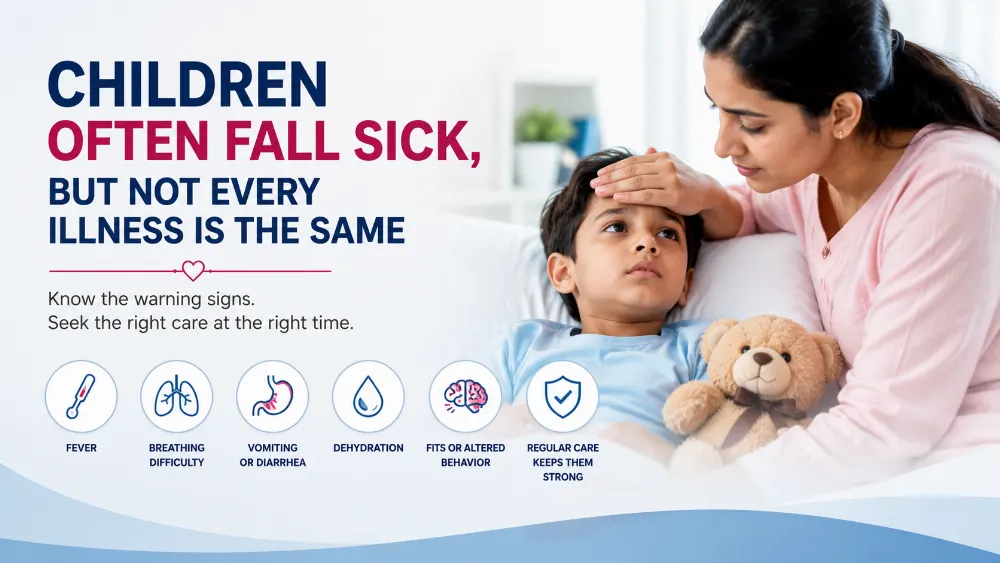
Children often fall sick, but not every illness is the same
Fever, cough, cold, vomiting, loose motion, poor feeding, and skin rashes are common in children. Most episodes improve with proper rest, fluids, and routine medical care, but some need urgent pediatric attention. The difficulty for parents is knowing when to stay calm and when to act quickly. In Mattannur, Kannur, Kuthuparamba, Irikkur, and Kasaragod, many families search online for the best pediatrician only when a child becomes very dull or unwell. Understanding warning signs early helps parents seek the right care at the right time. Pediatric review is not only about treating a current illness. It is also about checking hydration, breathing, growth, feeding, and overall recovery in a child whose body changes quickly.
Fever needs context, not panic
Fever is one of the most common reasons parents worry. A fever itself is not always dangerous, but the child's age, appearance, energy level, and associated symptoms matter. Babies below three months with fever need prompt medical review. Older children should also be seen urgently if fever comes with breathing difficulty, repeated vomiting, seizures, rash, dehydration, persistent crying, neck stiffness, confusion, or refusal to feed. A child who remains playful and drinks fluids may not be in immediate danger, but a child who looks sleepy, inactive, or unusually irritable needs closer attention. Parents should avoid overmedicating without guidance and focus on fluids, temperature control, and clear observation of the child's behavior.
Breathing problems should never wait
If a child is breathing fast, struggling to breathe, making a wheezing or noisy sound, or pulling the chest inward with each breath, urgent pediatric assessment is needed. Parents may also notice flaring nostrils, bluish lips, inability to drink, or a child who cannot complete sentences due to breathlessness. These signs can occur with asthma, bronchiolitis, pneumonia, allergy, or severe infection. Children can worsen faster than adults, so breathing difficulty should never be watched casually at home for too long. Even a child with a common cold may need urgent care if breathing effort increases. Quick review helps decide whether the child needs medicines, observation, oxygen support, or referral for further treatment.
Vomiting, diarrhea, and dehydration warning signs
Stomach infections are common in childhood, but dehydration is the real danger. Parents should watch for dry mouth, poor urine output, no tears while crying, sunken eyes, unusual sleepiness, rapid breathing, and refusal to drink. Repeated vomiting also matters because fluids may not stay down. Infants and toddlers can become dehydrated quickly. Home care should focus on oral fluids, continued feeding when tolerated, and not forcing heavy meals. Medical review is needed if symptoms continue, if there is blood in stool, if the child becomes weak, or if fever and abdominal pain are severe. A pediatrician helps judge hydration level and decides whether oral treatment is enough or further support is required.
Fits, fainting, and altered behavior
Any seizure, unusual jerking, fainting episode, or sudden change in awareness needs urgent pediatric assessment. Febrile seizures can happen in some children, but parents should not try to guess the cause without medical evaluation. If a child becomes unusually drowsy, stares without response, cannot be woken properly, or behaves in a way that is very different from normal, do not delay. Children may not always explain headache, body pain, or weakness clearly. Their behavior often gives the real clue. Parents who know the child's normal pattern are usually the first to notice that something is not right. Trusting that instinct and seeking help early is always safer than waiting.
Why routine pediatric care is also important
Urgent illness is only one part of pediatrics. Regular pediatric care also covers vaccination, nutrition, growth monitoring, recurrent infection review, allergy support, anemia screening, and developmental guidance. Some children fall sick often not because they have serious disease, but because sleep, food habits, immunity, and exposure patterns need attention. Others may have tonsil issues, asthma tendency, poor weight gain, or feeding difficulty. A pediatrician can connect all these clues over time. That is why families benefit from a trusted child specialist who knows the child's history rather than relying on random treatment each time fever appears.
What parents can do before reaching the clinic
Keep the child comfortable, give fluids if possible, note the temperature, count urine output, and observe breathing and activity. Bring details of recent medicines, vaccination history, and any known allergies. Avoid giving antibiotics without prescription, and avoid forcing foods when the child is vomiting or weak. If the child is very young, very sleepy, or struggling to breathe, go directly for urgent medical care. Good observation at home combined with timely action often makes a major difference in recovery and safety.

