
17
Jun
When Should You See a Cardiologist? Early Warning Signs You Should Not Ignore
Many people assume that heart problems always begin with severe chest pain or a dramatic medical emergency. In reality, heart disease often develops gradually, and the early warning signs can be subtle. A feeling of heaviness in the chest, unusual tiredness, breathlessness while climbing stairs, or occasional palpitations may seem harmless at first. Because these symptoms are often mild, many people delay seeking medical attention and hope the problem will go away on its own.
Unfortunately, waiting too long can allow an underlying heart condition to worsen. Early diagnosis and treatment can make a significant difference in preventing serious complications and improving long-term health outcomes.
For families across Mattannur, Kannur, Kuthuparamba, Irikkur, Kasaragod, and nearby regions, understanding the early signs of heart disease is an important step toward protecting cardiovascular health.
Why Heart Symptoms Are Often Overlooked
One of the biggest challenges in heart care is that symptoms do not always appear in the way people expect. While chest pain is a common warning sign, many heart conditions present themselves through less obvious symptoms.
People often blame fatigue on a busy schedule, breathlessness on age or lack of fitness, and dizziness on stress or dehydration. Some individuals experience symptoms only during physical activity and feel normal while resting. Others may dismiss occasional discomfort because it comes and goes.
Heart disease does not always announce itself loudly. In many cases, the body sends small signals long before a major cardiac event occurs. Recognizing these signals and seeking medical evaluation early can help prevent emergencies in the future.
Common Heart Symptoms That Need Medical Attention
Certain symptoms should never be ignored, especially when they occur repeatedly or become more noticeable over time.
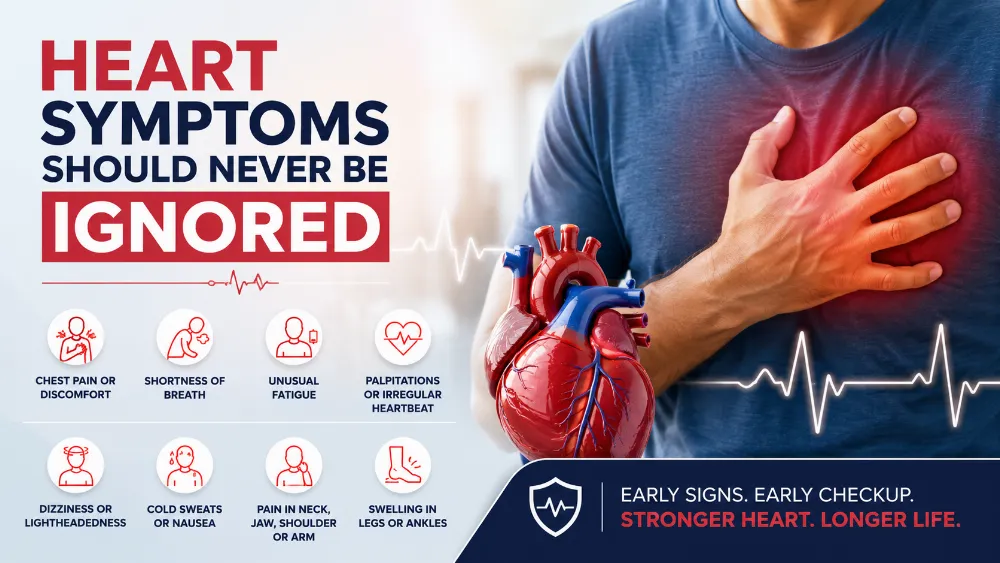
Chest Pain or Chest Pressure
Chest discomfort remains one of the most recognized signs of heart disease. However, it may not always feel like sharp pain. Many patients describe it as:
- Tightness in the chest
- Pressure or heaviness
- Burning sensation
- Squeezing feeling
- Discomfort during physical activity
Symptoms that occur during exertion and improve with rest should always be evaluated by a healthcare professional.
Shortness of Breath
Difficulty breathing while walking, climbing stairs, or performing routine activities can sometimes indicate an underlying heart problem.
When the heart is unable to pump blood efficiently, fluid may build up in the lungs, making breathing more difficult. Breathlessness may occur during activity or even while resting in more advanced cases.
Unusual Fatigue
Persistent tiredness without an obvious cause can sometimes be linked to reduced blood flow and heart function.
Many patients report feeling exhausted even after adequate sleep or finding it difficult to complete routine daily activities that were previously easy.
Palpitations
A racing heartbeat, fluttering sensation, skipped beats, or irregular pulse may indicate a heart rhythm abnormality.
Although palpitations are not always dangerous, recurring episodes should be assessed to determine whether further investigation is needed.
Dizziness or Lightheadedness
Reduced blood flow to the brain can cause dizziness, fainting, or feelings of instability. While dizziness has many possible causes, it can sometimes signal a cardiovascular problem that requires attention.
Swelling in the Legs or Ankles
When the heart cannot pump effectively, fluid may accumulate in the lower limbs. Swelling of the feet, ankles, or legs can be associated with heart failure and other cardiovascular conditions.
Heart Symptoms Are Not Always the Same for Everyone
Heart disease does not affect everyone in the same way. Symptoms can vary significantly based on age, gender, and existing health conditions.
Women often experience less obvious symptoms compared to men. Instead of severe chest pain, they may notice:
- Unusual fatigue
- Nausea
- Indigestion-like discomfort
- Sleep disturbances
- Neck or jaw pain
- Shortness of breath
Older adults may also experience atypical symptoms that can easily be mistaken for normal aging.
People with diabetes are another group that requires special attention. Diabetes can affect nerve function, making it possible for significant heart problems to occur with little or no chest pain.
This is why regular medical review is important for individuals with known cardiovascular risk factors.
Why Early Testing Matters
Many cardiovascular conditions develop gradually over several years.
Plaque can slowly accumulate inside blood vessels, reducing blood flow without causing immediate symptoms. Blood pressure may remain elevated for years before noticeable problems appear. Heart rhythm disorders can come and go intermittently, making them difficult to detect without proper evaluation.
When symptoms become severe, significant damage may already have occurred.
Early assessment allows doctors to identify risk factors and detect problems before they progress.
Depending on symptoms and medical history, a cardiologist may recommend investigations such as:
- Blood pressure monitoring
- Electrocardiogram (ECG)
- Echocardiogram
- Treadmill stress testing
- Blood investigations
- Cardiac imaging
- Holter monitoring
These tests help provide a clearer understanding of heart health and guide appropriate treatment decisions.
Importantly, testing can also reassure patients when symptoms are caused by non-cardiac conditions such as anxiety, acidity, muscle strain, or respiratory issues.
Knowing the true cause of symptoms helps eliminate uncertainty and ensures the right treatment approach.
Who Should Consider a Preventive Heart Checkup?
Heart evaluations are not only for people who have symptoms.
Preventive cardiology plays an important role in reducing future health risks.
You should consider scheduling a heart health assessment if you:
- Are over the age of 40
- Have diabetes
- Have high blood pressure
- Have high cholesterol
- Are overweight or obese
- Smoke or use tobacco products
- Have a sedentary lifestyle
- Have a family history of heart disease
- Have kidney disease
- Have thyroid disorders
- Have sleep apnea
A preventive consultation allows doctors to assess risk factors, review lifestyle habits, evaluate medications, and recommend personalized strategies for maintaining cardiovascular health.
This approach often helps identify issues before symptoms appear.
Lifestyle Habits That Increase Heart Disease Risk
Modern lifestyles contribute significantly to cardiovascular disease.
Many risk factors are directly related to daily habits and can be modified with appropriate guidance and commitment.
Common lifestyle factors that increase heart risk include:
Poor Diet
Frequent consumption of processed foods, sugary beverages, excessive salt, and unhealthy fats can contribute to high blood pressure, obesity, and cholesterol problems.
Lack of Physical Activity
Regular exercise helps maintain healthy blood pressure, improves circulation, supports weight management, and strengthens the heart muscle.
Sedentary lifestyles increase cardiovascular risk substantially.
Smoking and Tobacco Use
Smoking damages blood vessels, increases blood pressure, and significantly raises the risk of heart attack and stroke.
Stopping tobacco use remains one of the most effective ways to improve heart health.
Poor Sleep
Sleep is often overlooked as a health factor. Chronic sleep deprivation can negatively affect blood pressure, metabolism, and overall cardiovascular health.
Stress
Long-term stress can influence hormone levels, blood pressure, eating habits, and sleep quality.
Many working professionals and business owners experience continuous stress without realizing its impact on heart health.
Making small but consistent lifestyle improvements can produce meaningful long-term benefits.
When Chest Pain Is a Medical Emergency
While some symptoms can be evaluated through routine appointments, certain situations require immediate medical attention.
Seek emergency care immediately if chest pain is:
- Severe or sudden
- Associated with sweating
- Accompanied by fainting
- Linked to significant breathlessness
- Associated with nausea or vomiting
- Radiating to the jaw, shoulder, neck, or arm
- Accompanied by bluish lips or skin
Patients with known heart disease should also seek urgent care if symptoms suddenly worsen.
Time is critical during a heart attack. Early diagnosis and treatment help preserve heart muscle function and improve recovery outcomes.
Delaying treatment or relying on home remedies can increase the risk of complications.
If there is any doubt, it is always safer to seek emergency medical evaluation.
How Cardiology Care Supports Long-Term Health
Cardiology is not only about treating heart attacks and emergencies. It also plays an important role in long-term disease prevention and health management.
Patients living with hypertension, cholesterol disorders, previous heart procedures, irregular heart rhythms, or multiple medical conditions often benefit from ongoing follow-up.
Regular consultations allow specialists to:
- Monitor treatment effectiveness
- Adjust medications when needed
- Track risk factors
- Recommend lifestyle modifications
- Identify new symptoms early
- Prevent future complications
Many patients also benefit from coordinated care involving cardiology, general medicine, nephrology, diabetes management, nutrition counseling, and preventive health services.
This integrated approach supports overall wellness rather than simply treating isolated symptoms.
Conclusion
Heart disease remains one of the leading health concerns worldwide, but many serious complications can be prevented through early recognition and timely medical care. Symptoms such as chest discomfort, breathlessness, fatigue, palpitations, dizziness, and swelling should never be ignored, especially when they occur repeatedly or worsen over time.
Regular heart checkups are valuable not only for people with symptoms but also for those with risk factors such as diabetes, high blood pressure, high cholesterol, obesity, smoking history, or a family history of cardiovascular disease.
Protecting your heart starts with paying attention to the signals your body provides. Early evaluation, healthy lifestyle choices, and preventive care can help reduce risks, improve quality of life, and support long-term cardiovascular health for years to come.

